
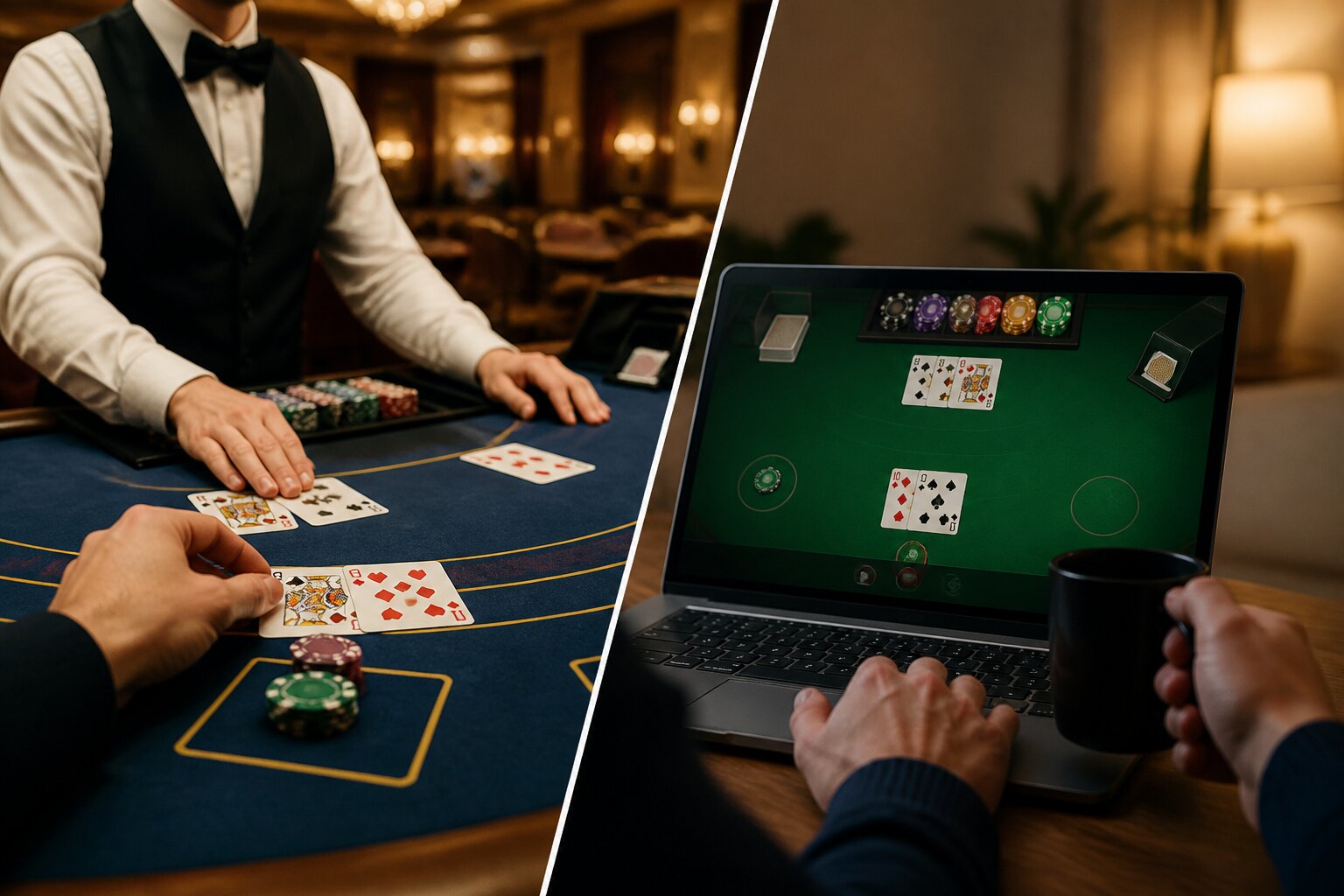
Ever sat at a blackjack table, cards in hand, feeling the unbeatable buzz of the casino floor? Or maybe you're more at home playing a quick game on your mobile, cup of tea by your side, stakes set in pounds, and no pressure from the dealer's expectant stare. Both ways promise the thrill of 21, but they play out very differently.
The sights and sounds of a busy casino make every hit and stand feel cinematic, while online blackjack swaps glitzy lights for slick graphics and round-the-clock convenience. Beyond that surface contrast are differences in pace, rules, interaction and access that change how the game feels and how you approach it.
Which version suits you best, and what might surprise you when you switch from one to the other? Let’s look at what sets each apart.
How Does the Playing Environment Differ?
The atmosphere in a land-based casino is unmistakable. There’s the weight of physical chips, the feel of cards in your hand and the low-level hum of people and machines. Table layouts are consistent, players sit side by side, and the design of the space encourages longer visits with service, lighting and sound all contributing to the experience.
Online blackjack replaces these physical cues with a streamlined interface. On mobile or desktop you tap buttons instead of handling chips; outcomes in digital tables are generated by software, while live dealer streams bring a human element to your screen. Playing online lets you set your own tempo, so you can join for a single hand or stay for a longer session without the rituals of travel and dress that a casino demands.
These environmental differences shape how you play and how long you play, and they also affect how you interact with dealers and other players at the table. The next section explores that interaction in more detail and how it changes between formats.
Dealer Interaction: Real vs Digital Experiences
In a land-based casino, dealers are central to the experience. They handle cards, manage bets and often chat with players in a professional, personable way. Their gestures and timing are visible, which helps players read the flow of the table and resolve any questions on the spot.
Online, the interaction varies by game type. Pure digital tables run on software, so responses are instantaneous and entirely button-driven. Live dealer tables use real staff dealing real cards on camera; you can communicate via text chat, but exchanges are brief and kept focused on the game. Both formats are governed by clear rules of conduct, and operators require identity checks and age verification before real-money play.
With that human-versus-digital contrast in mind, it’s useful to consider how those differences affect the tempo of play and the way hands progress.
Game Pace & Flow: What Should Players Expect?
A land casino’s blackjack pace is shaped by human behaviour. You wait for each player to act, watch a dealer shuffle and deal, and the natural pauses create a predictable rhythm. That tempo makes it easier to reflect between hands and keeps rounds to a measured speed.
Online blackjack typically runs faster because there’s no manual shuffling and fewer interruptions. Digital tables deal hands quickly, and auto-play options can compress many rounds into a short time. Live dealer online games are slower than fully automated ones but usually still quicker than a busy casino floor.
Faster play means more hands in the same period, which affects time and money spent; knowing the pace helps you choose a format that fits your preferences and limits. Next, we’ll examine how rule variations and different game types can further change strategy and outcomes.
Impact of Rules & Game Variants
While the core objective of blackjack—getting a hand closer to 21 than the dealer without going over—stays the same, the rules and variants you encounter can differ considerably between land and online tables. Those differences do more than change the look of the game; they can shift optimal strategy, affect the house edge and change the value of particular plays such as splits, doubling and insurance.
Even small rule tweaks can have a measurable impact on long-term results, so being aware of the precise rule set you are playing under matters. It is also worth remembering that some online variants introduce side bets and special features that change risk and reward profiles, so familiarising yourself with those before staking real money is sensible.
Which Blackjack Rules Change Between Land and Online Play?
Physical casinos tend to favour traditional formats: multiple decks in use, dealer standing on most 17s and common payout structures. Tables in bricks-and-mortar venues often follow long-established conventions, which helps regular players know what to expect when they sit down.
Online platforms broaden the selection, offering variants such as European Blackjack, Blackjack Switch, Double Exposure and multi-hand games. These variants can change splitting, doubling and payout rules, and some alter the order in which cards are dealt or how the dealer’s hand is handled, so checking the specific rules and paytables before you play is important.
The online environment also allows for automated rule enforcement and clear display of paytables and rule statements, which can make it easier to compare versions. Whether in a physical or virtual setting, understanding the exact rule differences will help you adapt your approach and manage risk more effectively.
How Do Betting Limits and Table Minimums Compare?
Betting limits in casinos reflect running costs and venue positioning, so minimums are often higher than online. A casino located in a busy city centre or on a premium floor may set higher minimums to match its clientele, while quieter or off-peak tables might be more affordable.
Online operators can offer very low minimums as well as a wide range of high-stakes options, making it easier for different budgets to find a suitable table. The flexibility of online platforms also means you can often switch between low-stakes and high-stakes games quickly, and many sites provide clear minimum and maximum stakes for each table.
Understanding the betting range of a chosen game helps manage stakes and match the experience you want. Checking both the licensed operators and any site-wide wagering policies before playing will reduce surprises and help you stay within your budget. Always play responsibly and be aware of the rules that apply to the game you choose.
Social Elements: Is Blackjack More Social In a Casino?
Blackjack in a casino often has a social rhythm: players comment, celebrate shared wins and exchange quick advice. Dealers contribute to that atmosphere, balancing professionalism with light conversation. That face-to-face interaction can make sessions feel communal and can shape the way decisions are made at the table.
Online play is more private by default. Standard digital tables are solitary, while live dealer games offer chat functions that mimic some social features without the proximity of a physical table. For players who prefer quieter, focused sessions, the online environment can be ideal; for those who enjoy in-person company, a casino table remains the place to be. The choice between social energy and privacy often depends on what you value most from the experience.
Next, we’ll turn to the mechanics that ensure games are fair no matter where you sit.
Randomness & Fairness: Are Outcomes the Same?
Fairness is handled differently but with the same purpose: to ensure unbiased results. In a casino, shuffle procedures and visible card handling give players confidence, and oversight by staff maintains a transparent process. Online digital games use certified Random Number Generators to replicate that randomness in software, while live dealer streams show physical shuffling and dealing on camera.
Regulation and testing are central to both environments. Licensed operators and independent testing bodies verify that systems and procedures meet standards for fairness and integrity. These safeguards provide reassurance that the mechanics behind each hand are impartial and consistent across formats.
The practical side of access and convenience also affects how and when people play, so let’s look at that next.
Accessibility & Convenience of Playing
Attending a casino involves planning: travel, timing and sometimes queueing for a seat. For many, that is part of the occasion and the appeal. Online play removes those barriers: games are available anytime from a phone, tablet or computer, and you can join a table within moments. That accessibility opens the game to short sessions or extended play without leaving home.
Because access is immediate, it’s important to choose sites that operate within the legal framework and to be mindful of how ease of play affects time and spending. With a clear sense of the differences in environment, interaction, speed, rules and access, players can pick the version of blackjack that best matches the experience they want.
Whichever route you take, understanding these contrasts helps you make informed choices and enjoy the game responsibly.
Play Casino Games Online at Slots Baby
We invite you to experience the fun of casino gaming with us at Slots Baby. Our site is ready to welcome you whenever you fancy some entertainment.
Getting set up is hassle-free: creating an account and making a deposit is all it takes to start playing. We look forward to seeing you join in the enjoyment.
**The information provided in this blog is intended for educational purposes and should not be construed as betting advice or a guarantee of success. Always gamble responsibly.