
Ever wondered how casinos keep their games fair and spot the sharpest minds at the table? Card counting is a recognised form of advantage play, and casinos have developed a range of techniques to detect it and protect the integrity of their games.
Beneath the lights and clatter of chips there is careful monitoring: trained staff, cameras and data systems all working together to identify unusual play. What follows explains those measures in detail, showing how patterns and behaviours are linked to decisive action while respecting legal and privacy requirements.
If you want to understand how those signals turn into real checks on the floor, keep reading to see the practical methods used and what they mean for players and operators alike.
How Do Casinos Detect Card Counting?
Casinos combine human observation with data analysis to spot the telltale signs of advantage play. Betting patterns are a primary indicator: sudden, consistent increases in stake size at particular moments often trigger attention because they suggest the player is tracking the deck composition and betting when odds are favourable. Equally revealing are play patterns such as long stretches of careful, error-free decision making, selective participation in hands and avoidance of side bets that casual players often make.
Time at the table also matters. Extended sessions without normal breaks are more likely to be associated with systematic counting than with ordinary play. Staff and systems watch for clusters of these behaviours rather than any single action, building a picture that points towards advantage play.
This profiling feeds into surveillance and reporting tools so teams can prioritise which players to monitor more closely. The next section shows how cameras and analytics turn those behavioural clues into actionable evidence.
The Role of CCTV and Advanced Surveillance
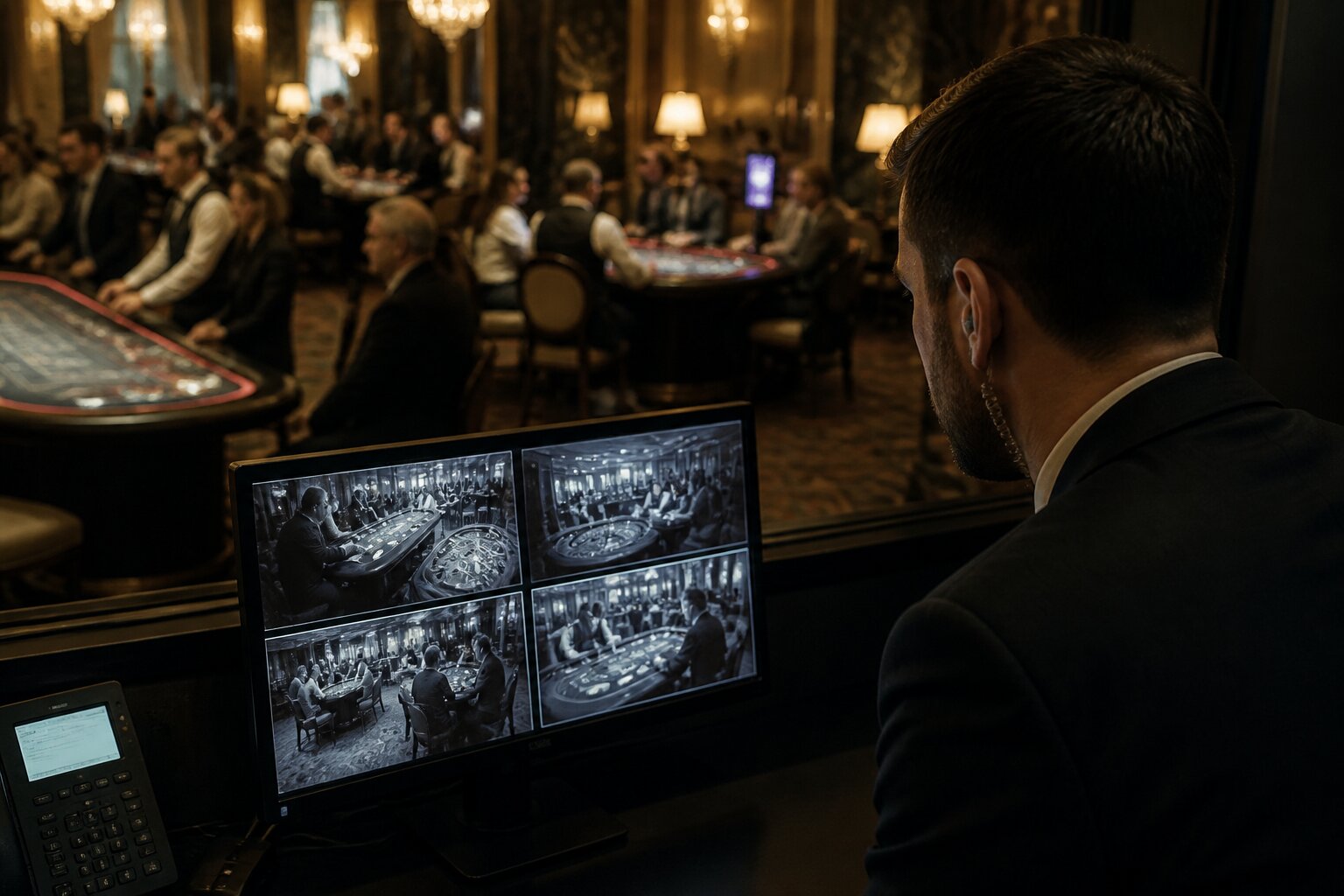
CCTV forms the backbone of floor oversight, capturing detailed footage of tables and individual players. High-definition cameras allow security teams to review hands, chip movements and seating patterns, and to correlate visual evidence with electronic records when needed.
In addition to cameras, analytics software flags unusual betting sequences and other patterns consistent with card counting. These systems reduce the time staff spend reviewing routine play by automatically highlighting anomalies for human review. Some venues also use controlled facial recognition and other matching tools to identify repeat visitors who have previously been linked to advantage play, following all applicable data-protection rules.
All monitoring technology operates within strict privacy and data-handling frameworks. Access is restricted to authorised personnel, and retention schedules and use of stored data are governed by regulatory requirements. With technology flagging potential issues, observers on the floor can concentrate on confirming what the footage and analytics suggest.
A Closer Look at Behavioural Observation
Floor staff add a human element that technology cannot replicate. Observers are trained to detect subtle signals in posture, chip handling and table interaction that can suggest counting or coordinated play. For example, someone who repeatedly glances at the discard tray or who maintains a rigid, highly focused demeanour while avoiding social interaction may attract attention because those actions are uncommon among recreational players.
Staff are also alert to signs of team play: coordinated betting among several people, frequent seat changes timed to specific hands, or discreet gestures that might indicate signalling. These nuances are easier to spot in person, where context and instinct play a role in turning a flagged pattern into a credible concern.
Where behavioural clues point to something worth investigating, teams cross-check with surveillance footage and digital records to build a fuller picture. The following section explains how those digital traces are captured and joined to the human observations.
Physical and Digital Tracking of Players
Casinos collect transactional and positional data that help link behaviour over time. Loyalty or player cards record bet sizes, play duration and table choices, creating a history that highlights persistent patterns. Video footage and electronic logs can then be matched to these entries so that a single incident does not stand alone.
Some venues use radio-frequency or chip-embedded tracking to follow the movement of chips and players across the floor, giving precise timelines of play. That level of detail helps determine whether a pattern is an isolated quirk or part of a systematic approach to advantage play.
All data collection is subject to legal protections. Access is limited and records are used to preserve game integrity and safety. Where tracking uncovers consistent indicators of advantage play, it informs staff decisions about further observation or intervention, which is described in the next section.
Staff Training: Recognising Suspicious Play
Staff training ensures frontline teams can interpret the signals that systems and cameras highlight. Training combines classroom study of common advantage-play methods with practical scenarios on the floor so dealers and supervisors develop an eye for irregularities such as precise bet timing, chip-stacking techniques used to mask stakes, or repeated avoidance of routine errors.
Training also covers professional conduct during enquiries, emphasising calm, respectful engagement and accurate record keeping. Regular refreshers update staff on evolving methods and new detection tools so responses remain proportionate and consistent with regulatory standards.
When training produces a confident, observant floor team, investigations are more focused and less disruptive to other guests. The next section describes what happens when that focused attention identifies a likely case of card counting.
What Happens When Card Counting Is Suspected?
When indicators point to advantage play, casinos follow a measured process designed to be fair and defensible. Security and management review the evidence, combining live observation, video and transaction logs to reach a reasoned assessment. If warranted, a player may be invited to speak with staff in private so concerns can be explained and the player’s perspective heard.
During such conversations, the emphasis is on clarification rather than accusation. Depending on the findings, options range from continued monitoring with no immediate action, to restrictions on participation in particular games, or in rare cases a request to leave the premises. All decisions are documented and handled according to legal and regulatory obligations.
If behaviour is repeated or clearly breaches house rules, venues may record the individual’s details in industry-shared records to alert other operators. Any sharing of personal data follows data-protection laws and only occurs after proper review. Bans or other restrictions are implemented only after careful consideration and with full documentation, ensuring transparency and compliance.
Every venue balances protecting the fairness of play with treating guests respectfully, and that balance guides how suspected cases are managed and resolved.
Explore Casino Games at Slots Baby
Fancy discovering something new and having a little fun along the way? We welcome you to explore all the casino games our site has to offer, in a relaxed and friendly setting.
Getting started couldn't be simpler – just create an account, make a deposit and you’re ready to play. We’d love to see you join us at Slots Baby.
**The information provided in this blog is intended for educational purposes and should not be construed as betting advice or a guarantee of success. Always gamble responsibly.