
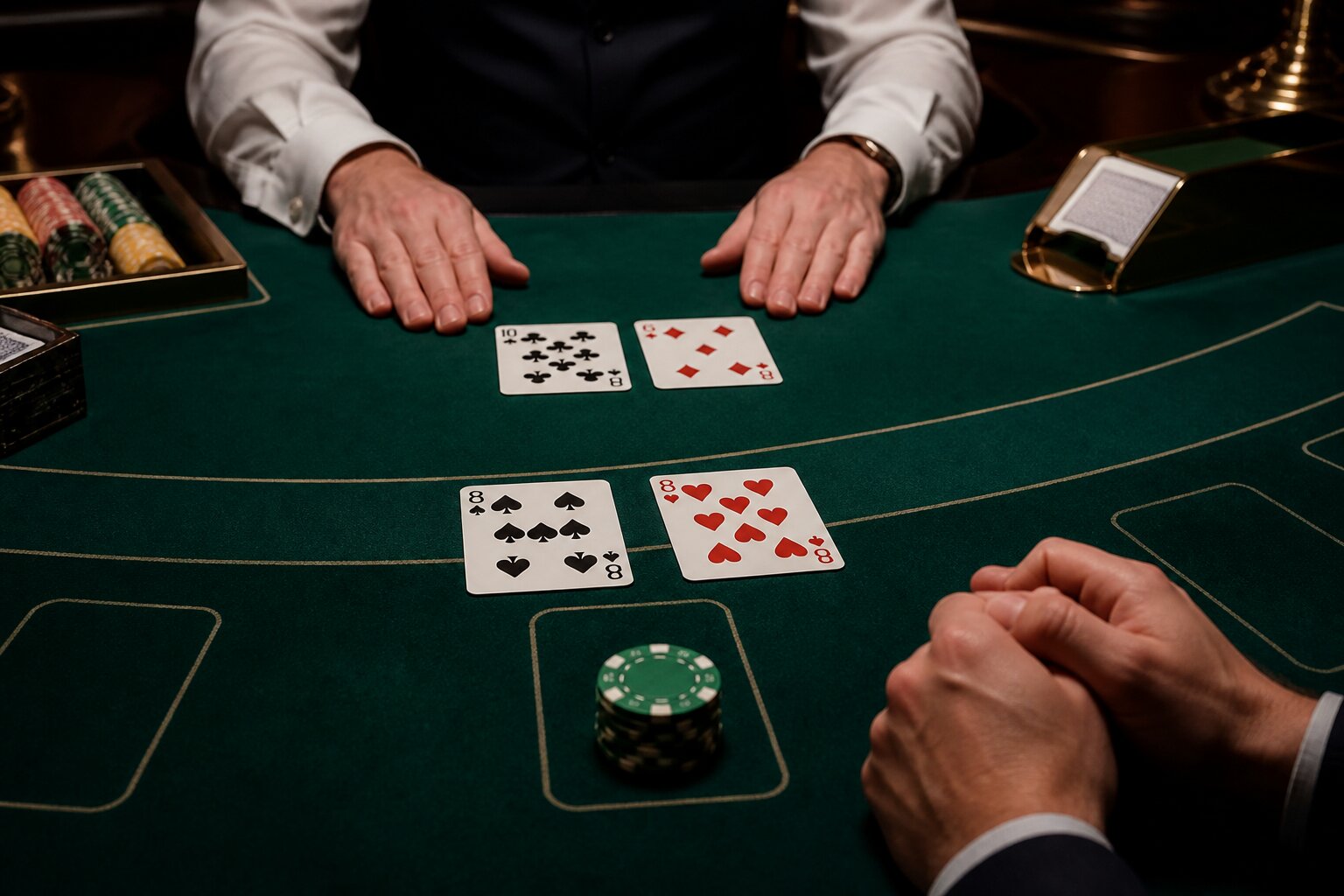
Blackjack has its own vocabulary, and “standoff” is one term that often causes confusion. If you’ve seen it at a table or in a guide and wondered what it means for your hand and your money, this guide will clear it up.
Read on to learn what a standoff is, when it happens, and how it affects outcomes at the table. Along the way you’ll find examples that make the rules easy to follow.
What Does ‘Standoff’ Mean in Blackjack?
A standoff, sometimes called a tie, is simply a tie between the player’s hand and the dealer’s hand. When both totals are identical at the end of a round, that round is neither a win nor a loss.
Practically, this means your original stake is returned. There is no profit, but you do not lose the bet either. It is a standard feature of the game and part of the normal flow of play.
A basic example: you and the dealer both finish with 19. Neither side has exceeded 21, so the hand ends in a standoff and your bet comes back to you.
When Does a Standoff Occur at the Blackjack Table?
A standoff can only occur when both the player and the dealer have standing hands that total the same value and neither has gone over 21. Common equal totals are 17 through 21, but any exact match qualifies.
There are a few situations to note. If the dealer has blackjack (an ace with a ten-point card) and the player also has blackjack, some games treat this as a standoff while others apply a separate rule — check the table rules before you play. Similarly, if one party busts, a standoff cannot occur; the busting hand loses automatically.
Understanding these scenarios helps you know what to expect when cards are revealed, and avoids surprises about whether a hand will be paid out or returned.
How Are Player Outcomes Determined in a Standoff?
When a standoff occurs, the casino returns your original bet and the round ends. You do not receive any winnings beyond getting your stake back.
This outcome is distinct from other possible results:
- Winning, where the player receives their stake back plus a payout based on the game rules.
- Losing, where the stake is retained by the house.
The standoff sits between those results as a neutral resolution for that round. It does not produce a profit or a loss for that hand, so your net position remains the same as it was before the bet was placed.
For clarity, the returned stake is the only financial effect of a standoff. Your running balance after the hand remains unchanged, aside from any bets you place in subsequent rounds. Note that special circumstances such as side bets, ante returns or table fees may be governed by separate rules, so always check the specific game terms before you play.
What Are the Rules for a Standoff in UK Casinos?
Casinos in the UK operate under regulatory standards that require transparent handling of game outcomes, including standoffs. While core treatment of a standoff—returning the player’s stake—is consistent, small procedural details can vary by venue or game variant.
For example, some tables pay a blackjack at a different rate from a regular win, and rules can differ on how blackjacks versus pushes are handled when both dealer and player have 21. It’s sensible to glance at the specific table or game rules so you know how a particular version treats those edge cases.
If you are playing live dealer or electronic blackjack, the displayed rules or dealer announcements will usually make the treatment of standoffs clear before you place a bet.
Differences Between Standoffs, Wins, and Losses
A standoff returns your original stake and nothing more. A win delivers a payout on top of the stake; a loss results in the stake being retained by the house.
Blackjack-specific outcomes can differ. A standard win typically pays even money, while a natural blackjack often pays at a higher rate under the game’s rules. Conversely, a bust by the player removes any possibility of a standoff because the hand has already lost.
Knowing these distinctions helps you interpret table results and set realistic expectations about how any single hand will affect your balance.
You might be wondering how this all affects strategy; the next section clears up common misconceptions so you can approach hands with confidence.
Does a Standoff Affect Player Winnings or Bets?
A standoff itself does not change your winnings or the amount you have staked. When a hand ends in a standoff your original stake is returned, so your balance after the hand is the same as it was before that hand began.
Because each hand is treated separately, a standoff in one round does not alter payouts, odds or the outcome of subsequent rounds. It simply resolves that single contest between your cards and the dealer’s without loss or gain for that particular bet.
A standoff is best viewed as a neutral outcome that preserves your capital for the next decision you make at the table. Any separate bets placed, such as side bets, will be resolved according to their own rules and are not automatically affected by a main-hand standoff.
Common Myths About Standoffs in Blackjack
Several myths surround standoffs, and addressing them helps reduce confusion. One frequent belief is that a standoff counts as a dealer win; it does not. Neither side wins or loses—the stake is returned.
Another misconception is that a standoff changes the odds of future hands or the dealer’s behaviour. Every round is independent; a prior push has no effect on what cards will be dealt next.
Finally, some players think standoffs are rare or exceptional. In reality, pushes occur regularly, especially when dealer rules require standing on certain totals. Recognising their normality makes it easier to accept and move on to the next hand.
Key Points to Remember About Blackjack Standoffs
Here are the essential takeaways to keep in mind when you see “standoff” at the table:
Standoffs Are Ties
A standoff is a tie between your hand and the dealer’s, resulting in no winner for that round.
Your Bet Is Returned
When a standoff happens, your original stake is returned to you. There is no additional payout and no loss for that hand.
Rules Can Vary
While the basic treatment of a standoff is consistent, some games and tables have specific rules for blackjacks and pushes. Check the displayed rules before you start playing.
Keep these points in mind and you’ll handle pushes confidently during play. If you ever need clarification at a particular table, the dealer or game rules should explain how standoffs are handled.
**The information provided in this blog is intended for educational purposes and should not be construed as betting advice or a guarantee of success. Always gamble responsibly.