
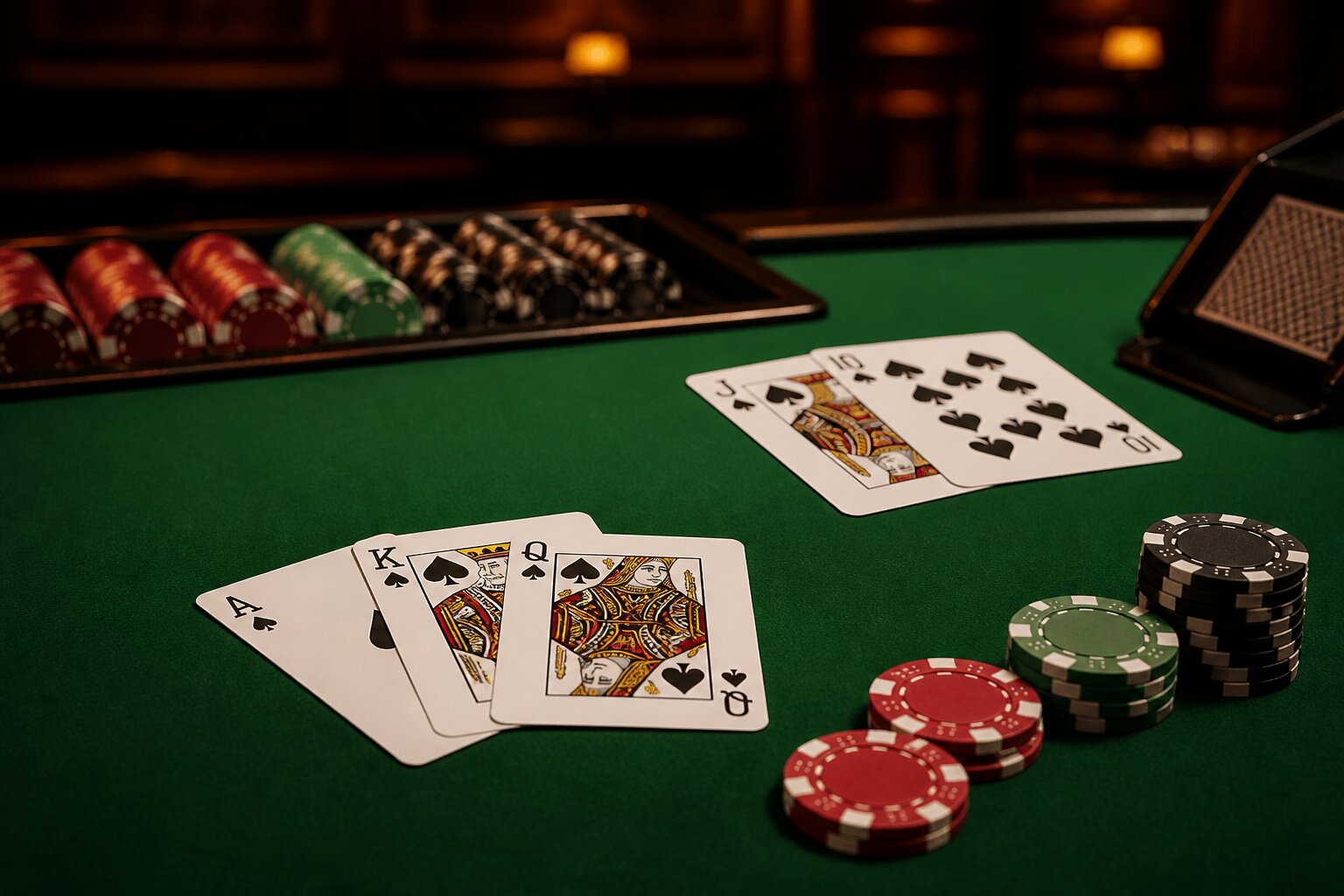
Ever wondered what makes the 21+3 side bet one of the most exciting additions to a game of blackjack? If you have seen players celebrate before the main hand even starts, this optional wager could be the reason.
Suited trips is the top result on the 21+3 paytable, but what does it mean in practice and how is it formed? Read on to learn how suited trips fits into the side bet, how payouts work, and what the odds look like before you decide whether to give it a try.
What Are Suited Trips in Blackjack?
Suited trips on the 21+3 side bet refers to three cards that match in both rank and suit when you combine your first two cards with the dealer’s upcard. In multi-deck games, which are common in casinos, it is possible for those three cards to be identical in rank and suit because multiple decks are used in the shoe. This is what makes suited trips a valid outcome on the 21+3 paytable.
To picture it: if your first two cards and the dealer’s upcard are all Kings of Spades taken from different decks in the shoe, that is suited trips. The same applies to three Queens of Hearts or three 8 of Diamonds in a multi-deck game. Because the hand requires an exact match on both rank and suit, suited trips is very rare and sits at the top of the paytable.
Suited trips is evaluated using only your initial two cards plus the dealer’s exposed card, so it is finalised before play on the main blackjack hand develops. That immediacy adds to the thrill and leads neatly into how the side bet itself is placed and resolved.
How Does the 21+3 Side Bet Work?
The 21+3 side bet is an optional wager made before cards are dealt. It uses precisely three cards—the player’s first two and the dealer’s upcard—to form poker-style combinations. Those combinations are then paid according to a separate paytable, independently from the main blackjack outcome.
When play begins, the dealer deals each player two cards and reveals their upcard. The 21+3 bet is assessed immediately: if the three-card set forms a recognised combination, the player receives the corresponding payout. Qualifying hands typically include suited trips, straight flush, three of a kind, straight, and flush, each with its own payout level. Because the side bet is resolved on those first three cards, the subsequent action in the main hand does not affect the side-bet result.
The structure of the 21+3 bet blends elements of poker and blackjack, giving players an extra layer of excitement before the round proceeds. Next, we will look at how those winning combinations are rewarded.
What Are the Payouts for Suited Trips?
Suited trips carries the highest payout on most 21+3 paytables. A common top rate is 100 to 1, which means a five-pound side stake would generate five hundred pounds in winnings plus the original five pounds returned. That scale reflects the rarity of the outcome in a multi-deck shoe.
Other typical payouts on a standard paytable are:
- Straight flush, often around 40 to 1. This is three consecutive cards of the same suit, such as 5, 6 and 7 of spades.
- Three of a kind, often around 30 to 1. That is three cards of the same rank but not all of the same suit.
- Straight, often around 10 to 1. Three cards in sequence regardless of suit.
- Flush, often around 5 to 1. Three cards of the same suit but not in sequence.
Paytables can vary between casinos and between table configurations, so it is sensible to check the displayed table before placing a side bet. With the payouts understood, it helps to compare 21+3 to other side-bet options to see where it sits among the choices players commonly face.
Comparing 21+3 to Other Blackjack Side Bets
21+3 stands apart because it borrows three-card poker combinations rather than focusing solely on pairs or the dealer’s potential blackjack. That gives it a different risk-reward profile compared with side bets such as Perfect Pairs or Insurance.
Perfect Pairs concentrates on your initial two cards forming a pair, with higher payouts if the pair is same colour or same suit. Insurance is offered only when the dealer shows an Ace and is a bet on whether the dealer has blackjack; it pays at a fixed 2 to 1 and is unrelated to the player’s own cards. By contrast, 21+3 rewards a range of three-card configurations and can pay out for multiple different outcomes on the same round.
Because 21+3 evaluates three cards at once, it tends to produce bigger top payouts than many simple pair bets, but it also carries a house edge that players should weigh against those potential returns. That comparison leads into the statistical side of the bet: the odds and how the house edge is calculated.
Odds & House Edge: What to Know
Suited trips is an infrequent result. In multi-deck games the probability of the three-card suited-trips combination is very low, commonly around one in several thousand hands depending on the number of decks in use. When the other qualifying hands for 21+3 are included, the overall chance of winning some return on the side bet increases, but the distribution of outcomes is heavily weighted toward the lower-paying combinations.
The house edge on the 21+3 side bet typically falls in the low single digits, often between about 3.2% and 4.2%, though the exact figure depends on deck count and the paytable employed. These percentages reflect long-term expectation rather than what might happen in any single session.
Players should be mindful of staking within their means and of the legal minimum age for play. With a clear sense of the odds and paytable, a player can decide whether the excitement and potential payouts justify the extra wager. Understanding these figures helps when considering whether to add 21+3 to a round; next we will address whether anything can be done to influence the outcome.
Can You Influence the Outcome of Suited Trips?
The cards used to decide the 21+3 bet are dealt from the shoe or produced by certified random number generation in regulated online games. Because the three-card result is determined at the moment the cards are dealt, no skill, betting pattern, or timing can change the probability of a suited trips outcome. That is why strategies applied to the main blackjack decision tree do not affect the side bet.
Common Myths About Side Bets
Some widely held misconceptions about side bets include the following:
- Keeping a running card count will increase the chance of winning a specific side bet.
- Increasing the frequency of the side bet will improve long-term returns.
- Patterns or recent outcomes can be used as a guide to future results.
These ideas misinterpret how the cards are shuffled and dealt in regulated games. Modern casino procedures and certified random number generators produce independent outcomes for each round, so past results do not alter the statistical likelihood of future three-card combinations.
The Role of Randomness in 21+3
The 21+3 result is determined by the random distribution of cards in the shoe or by the game’s certified random number process. Because of that, the side bet should be viewed as an entertainment feature with infrequent large payouts and more common smaller results. Approaching it with clear expectations about risk and payout structure will make the experience more straightforward.
To finish, suited trips is the most lucrative single outcome on the 21+3 paytable, but it is rare and sits within a broader set of three-card possibilities. Knowing how the bet is formed, what the payouts typically are, and the odds involved lets you decide whether the added excitement of 21+3 fits your play style.
Play Casino Games at Slots Baby
We’d love to welcome you to our site, where you can explore and enjoy a variety of casino games at your own pace. Take your time and soak up the experience in a relaxed environment tailored just for you.
It’s simple to begin—just create your account, make a deposit, and you’re ready to play. We look forward to having you with us at Slots Baby.
**The information provided in this blog is intended for educational purposes and should not be construed as betting advice or a guarantee of success. Always gamble responsibly.