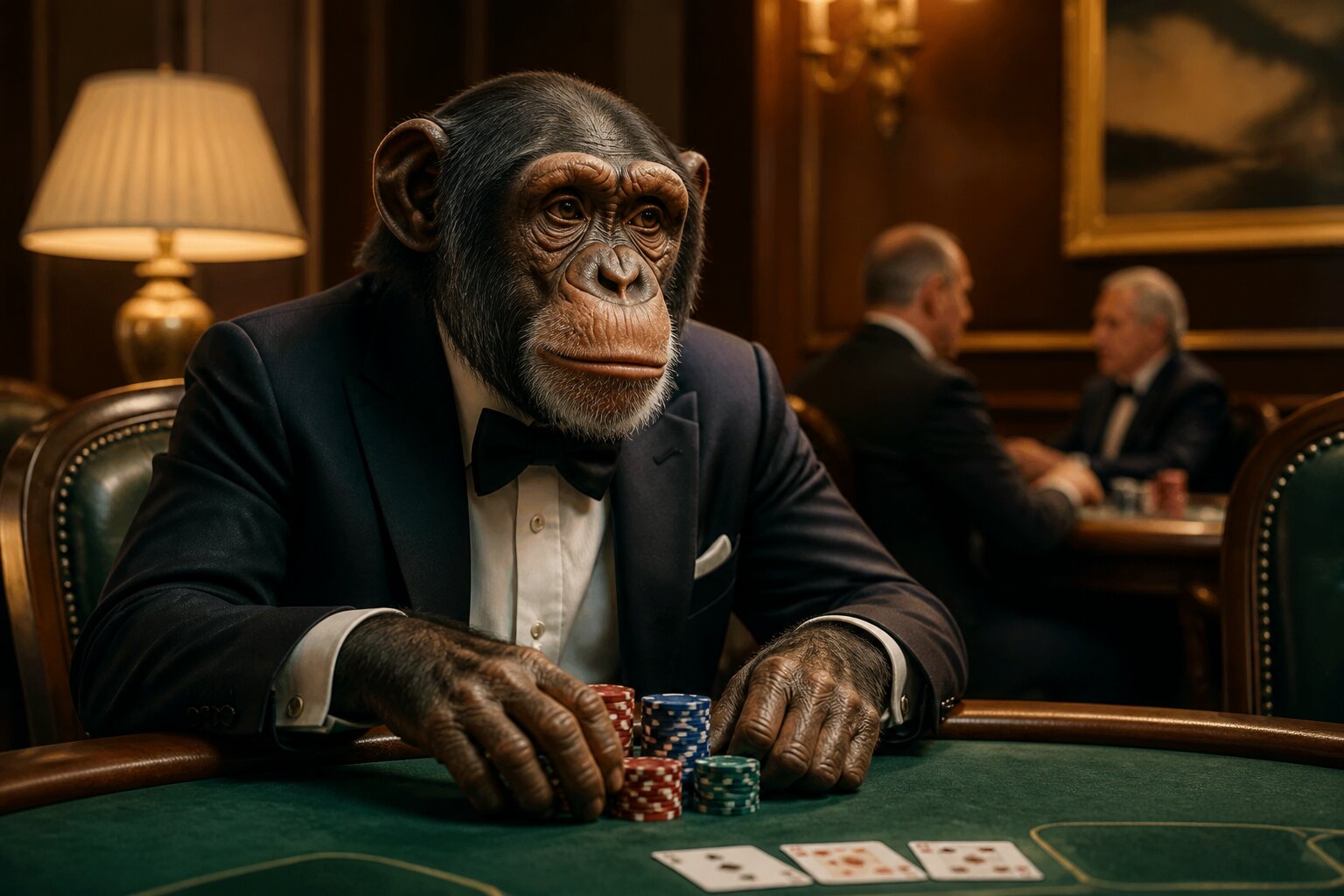
Ever heard someone talk about putting a “monkey” on a bet and wondered what they meant? The world of casino slang is full of quirky expressions, and “monkey” is one of the more distinctive terms used around gaming tables.
Learning a little of this language can sharpen your awareness at the casino and make conversations more fluent. Read on to find out exactly what a “monkey” means, where the word comes from, and how it fits into wider betting vocabulary.
What Does 'Monkey' Mean in Casino Betting?
In betting slang, a “monkey” denotes a sum of £500. It is a fixed amount: whenever someone mentions a monkey, they are referring to £500 whether in a casino game, at the racetrack, or in a betting shop. For example, “placing a monkey on roulette” means staking £500 on a single spin, while “winning a monkey on blackjack” means the player left with an extra £500.
The term works as a concise shorthand that speeds up conversation and keeps large sums discrete. It is commonly used in face-to-face settings where players and staff exchange quick, familiar phrases. The phrase does not imply anything about the odds or the method of play; it is purely a label for that particular amount.
Next, we’ll look at why players use this sort of slang and how it became part of gambling culture.
Why Do Casino Players Use the Term 'Monkey'?
Players use “monkey” for practical and social reasons. Practically, it economises speech: saying “a monkey” takes less time and attention than stating “five hundred pounds” in a crowded room. Socially, shared slang builds rapport among regulars and staff, creating a sense of belonging in groups that use the same terms.
Tradition also plays a role. Betting slang develops over many years and survives because it’s useful and memorable. Hearing someone say “I’ll put a monkey on the favourite” signals both the amount and an informal tone to the exchange. It’s not an instruction or strategy, simply a cultural shorthand used during wagers.
The origins of the phrase help explain how a currency reference turned into slang, and that’s what we explore next.
Where Did the Term 'Monkey' Come From?
The most widely accepted origin traces the expression back to historical currency imagery. During the era of the British Empire, a 500 Rupee banknote from India featured a monkey illustration. British servicemen and expatriates familiar with those notes are believed to have brought the nickname home, where it migrated into betting vocabulary to mean £500.
Evidence for this connection appears in mid-20th-century references from British gambling circles, particularly in London betting shops and at racetracks. By the 1940s and 1950s the term was already in circulation among bookmakers and regular punters. While the original 500 Rupee notes are now rare, the slang survived and became an established part of the British betting lexicon.
Having established the history, it helps to see how “monkey” fits alongside other common amounts in betting slang.
Other Popular Betting Slang Phrases
Betting slang includes many fixed-amount nicknames that people use to speak quickly and informally about money. Here are several common terms and examples of how they appear in conversation.
- Pony – £25. Example: “He put a pony on red at the roulette table.”
- Score – £20. Example: “I’m dropping a score on that number.”
- Ton – £100. Example: “He took home a ton from blackjack.”
- Grand (or G) – £1,000. Example: “She staked a grand on the final hand.”
- Bullseye – £50. Example: “He placed a bullseye on his favourite horse.”
- Carpet – £300. Example: “He wagered a carpet at the tables.”
- Double Carpet – £330. Example: “That’s a double carpet on the accumulator.”
These labels are part of the social fabric of betting. They describe amounts, not outcomes, and help conversations move faster in busy settings. The following section examines how commonly these older terms are used today.
Is 'Monkey' Still Common in Modern Casino Talk?
“Monkey” remains recognisable in many land-based venues and among players with roots in traditional betting environments. You are more likely to hear it at racetracks, casinos, and betting shops where face-to-face exchange encourages shorthand and banter. Staff and regulars often use the term naturally while handling larger bets.
In online settings, the slang is less prevalent. Digital platforms display exact amounts and reduce opportunities for the sort of informal spoken language that keeps these phrases alive. Younger players and newcomers may favour plain amounts rather than historical nicknames, although some terms persist in live chats and specialist forums.
Whether you encounter “monkey” or not depends on the venue and the people there. If you do hear it, you’ll know it simply means £500 and nothing more. Keep in mind that using or learning slang does not change how bets work, and it is important to gamble responsibly at any time.
Explore Casino Games at Slots Baby
At Slots Baby, we’re delighted to open our doors to anyone looking to enjoy a broad and exciting selection of casino games. With so many options at your fingertips, there’s always something new to try on our site.
Getting started is nice and straightforward – just create an account, make a deposit, and you’re ready to play. We look forward to welcoming you and hope you enjoy your experience with us.
**The information provided in this blog is intended for educational purposes and should not be construed as betting advice or a guarantee of success. Always gamble responsibly.