
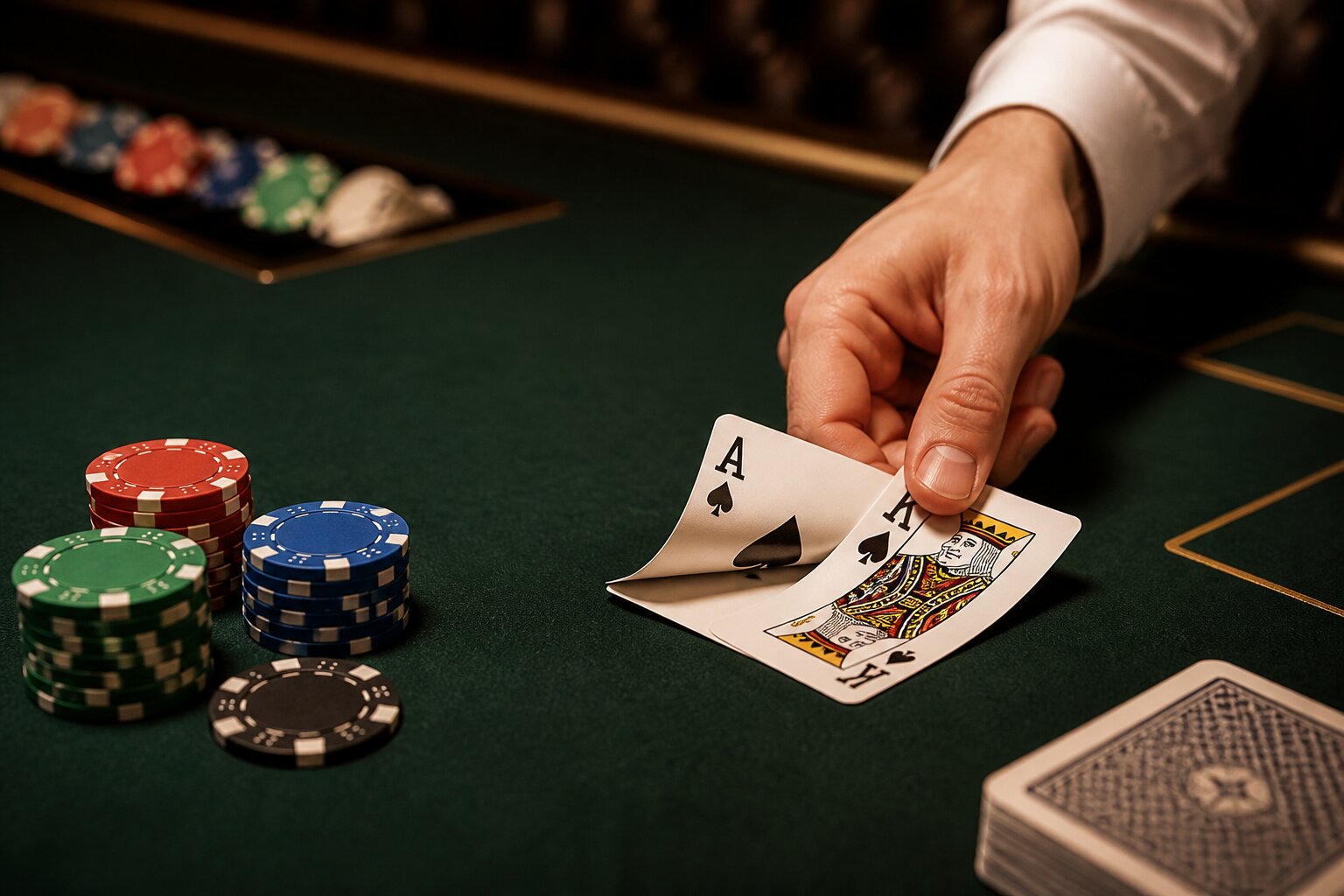
Fancy adding an extra side bet to your next blackjack session? Lucky Lucky Blackjack introduces a single, optional wager that uses the first three cards dealt to create special payout combinations.
This guide explains how the Lucky Lucky side bet works, which three-card hands pay out, and what to check on the payout table before you place a wager. Whether you are new to side bets or want a clearer reference, this article covers the essentials.
Read on and you’ll get a clear picture of the rules, typical payouts and how table conditions can affect your chances at the side bet.
How Is Lucky Lucky Blackjack Played?
Playing Lucky Lucky Blackjack follows standard blackjack procedures with one added choice: the side bet. You start by placing your main blackjack wager as usual. If you wish to participate in the Lucky Lucky side bet, you place a separate stake in the marked area on the table before cards are dealt.
After bets are placed, each player receives two cards and the dealer shows one up card. The Lucky Lucky side bet is evaluated using only those three cards: your two cards and the dealer’s up card. The side bet is settled immediately after the initial dealing, then the main blackjack hand continues under normal rules.
The side bet is optional and priced independently of your main wager. Treat it as an additional way to vary the session rather than part of standard strategy.
Lucky Lucky Blackjack Rules
Our version of Lucky Lucky Blackjack keeps the familiar mechanics of the main blackjack game while adding a single three-card side bet. The core card values and standard player actions remain unchanged, so existing knowledge of blackjack applies to the main hand.
The Lucky Lucky side bet is optional and placed in addition to your main wager. It is resolved separately from the main game and does not change how you play your main hand.
Dealer Play And Decks
The game is normally dealt from multiple standard 52-card decks shuffled together. Casinos commonly use six or eight decks, though the exact number may vary by venue.
The dealer stands on all 17s, including a soft 17 where an ace counts as 11. After resolving any side bets, the main blackjack round proceeds and outcomes for the main hand are decided by the usual rules.
Player Actions: Hit, Stand, Double And Split
Player options mirror classic blackjack. You may:
- Hit to take another card.
- Stand to keep your current hand and end your turn.
- Double to increase your wager, take one additional card, and then stand.
- Split when your first two cards form a pair, creating two separate hands with equal wagers.
Those choices apply only to the main blackjack hand. The Lucky Lucky side bet is independent and is not affected by any later actions or decisions you make on the main hand.
Which Cards Count For The Side Bet?
Only your first two cards and the dealer’s up card contribute to the Lucky Lucky side bet. No subsequent cards drawn during the hand influence the side bet outcome.
Because the side bet depends solely on those three initial cards, its result is determined and paid or lost immediately after the initial deal.
Lucky Lucky Blackjack Payouts
The Lucky Lucky side bet pays fixed amounts for specific three-card combinations. These payouts are presented on the paytable at the table and do not change during play. They reflect the rarity of each combination rather than offering a way to overcome the house advantage.
Below is the typical payout table used for the Lucky Lucky side bet at our tables. Exact numbers may vary by venue, so check the paytable before you play.
| Hand Combination | Payout |
|---|---|
| Suited 777 (three 7s of the same suit) | 200 to 1 |
| Suited 21 (Ace and two 10-value cards, all same suit) | 100 to 1 |
| Unsuited 777 (three 7s, any suits) | 50 to 1 |
| Unsuited 6-7-8 (any order, any suits) | 30 to 1 |
| Suited 6-7-8 (any order, all same suit) | 15 to 1 |
| Any suited 21 (Ace and two 10-value cards, same suit) | 10 to 1 |
| Any 21 (three cards totalling 21) | 3 to 1 |
| Any 20 (three cards totalling 20) | 2 to 1 |
| Any 19 (three cards totalling 19) | 2 to 1 |
These payouts show what you receive when the three initial cards match the named combination. The paytable gives you a direct way to compare potential returns across hand types.
Which Three-Card Hands Trigger Lucky Lucky Payouts?
The side bet rewards a number of specific three-card patterns made from your two cards and the dealer’s up card. Below is an explanation of the common winning combinations and what they mean in practice.
- Suited 7-7-7: Three sevens all in the same suit.
- Unsuited 7-7-7: Three sevens of any suits.
- Suited 6-7-8: A six, seven and eight that all share the same suit; order does not matter.
- Unsuited 6-7-8: A six, seven and eight in any suits and any order.
- Suited 21: An ace together with two 10-value cards, all of the same suit.
- Any suited 21: Similar to the above, any ace with two 10-value cards sharing a suit.
- Any 21: Any three cards that total twenty-one.
- Any 20: Any three cards that total twenty.
- Any 19: Any three cards that total nineteen.
Understanding these combinations helps you read the payout table quickly and see which outcomes pay most. Some hands are rare but highly paid; others occur more often and yield smaller returns.
As you move between tables, you might notice slight variations in which combinations are included or how they are described. Always confirm the local paytable wording to be sure you and the dealer share the same definitions.
How Do Side Bet Payouts Vary By Number Of Decks?
The number of decks in use changes the composition of the shoe and therefore the probability of certain three-card combinations. For instance, with more decks there are more copies of each card and suit, which slightly alters the chance of suited combinations appearing.
That said, most venues keep the posted payouts constant across different deck counts. What changes is the underlying likelihood of a given hand, not the payout value itself. If you are comparing tables, look at both the paytable and the number of decks to understand how the odds and returns interact.
Knowing the deck count gives context to the paytable, but it does not affect the fixed payout numbers you will receive when a winning combination occurs.
How To Read A Lucky Lucky Payout Table?
A payout table pairs each named hand with the amount it pays. Read across each row to find the hand description and the corresponding payout ratio. The payout shows how much the game will return for every unit wagered on the side bet when that combination appears.
For example, a listed payout of "100 to 1" means you receive £100 for every £1 placed on the side bet when that specific three-card combination occurs. Compare higher payouts with the relative frequency of the hand to judge whether the side bet appeals to you.
Before participating in a side bet, take a moment to confirm the exact wording and numbers on the table so there are no surprises once cards are dealt.
What Is The House Edge For Lucky Lucky Blackjack?
House edge describes the statistical advantage the game holds over time. For the Lucky Lucky side bet, the house edge depends on the paytable and the number of decks used. Depending on those factors, the house edge for this side bet typically falls within a range that reflects the relative rarity of the paid combinations.
Because the side bet outcomes are determined by fixed probabilities and payouts, skillful play of the main blackjack hand does not change the side bet’s expected return. Treat the side bet as an independent product with its own risk and reward profile.
If you choose to place side bets, do so with an understanding that they are separate from any strategy you might use at the main blackjack table.
How Are Pushes And Ties Resolved For The Side Bet?
Most versions of the Lucky Lucky side bet do not produce pushes. The wager is evaluated only against the three-card paytable and results in either a winning payout or a loss.
On the small number of tables where a push can occur, the rules will state that the side-bet stake is returned in that specific scenario. Because handling of ties varies across variants, check the local rules to confirm how pushes are managed before you place a side wager.
If you are unsure how a particular table treats edge cases, ask the dealer or consult the posted rules so you are clear on all possible outcomes.
Final note: the Lucky Lucky side bet provides an additional way to vary a blackjack session using the first three cards dealt. Familiarise yourself with the paytable and table rules so the side bet adds interest to your play without unexpected surprises.
**The information provided in this blog is intended for educational purposes and should not be construed as betting advice or a guarantee of success. Always gamble responsibly.