
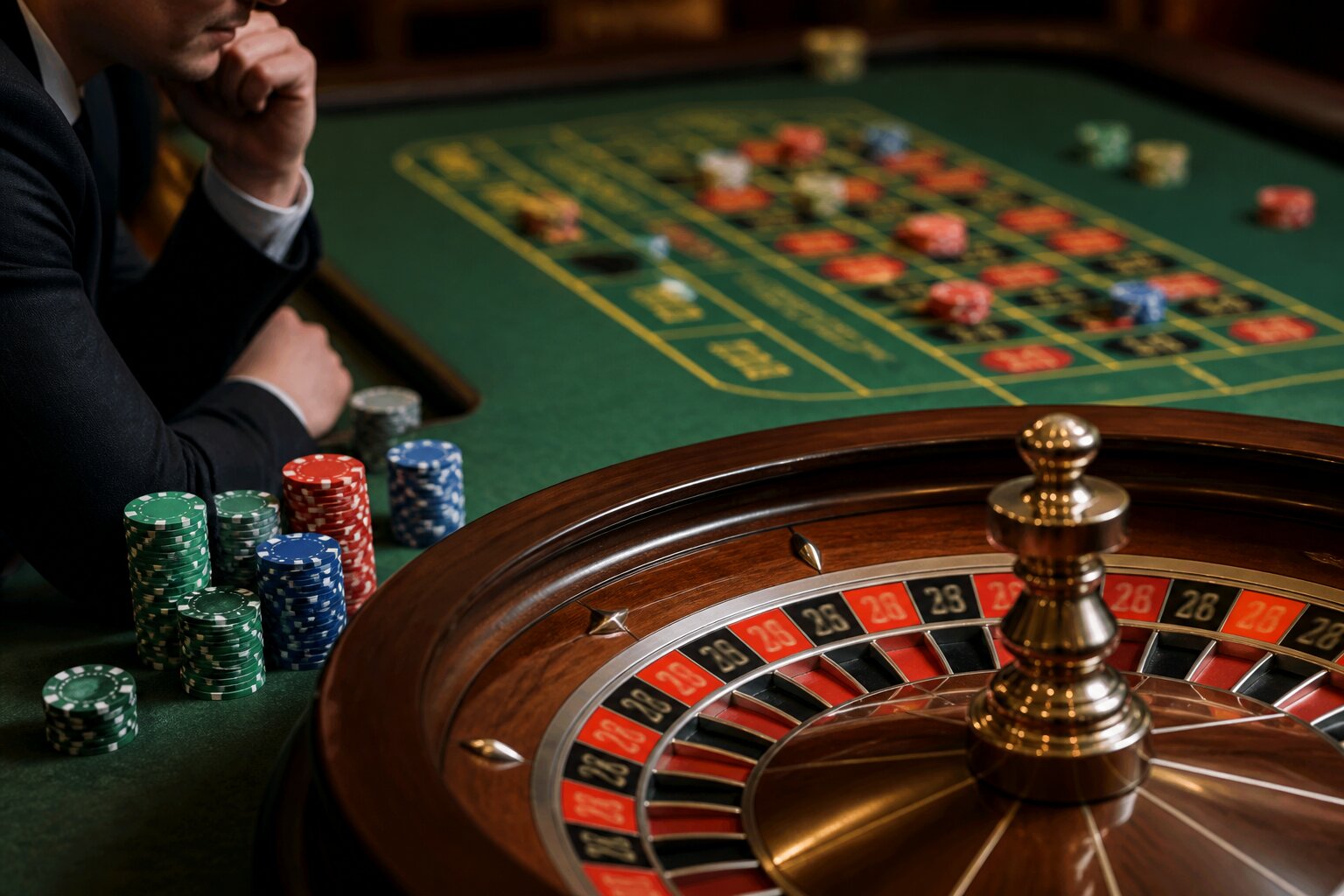
Roulette is one of the most recognisable casino games, drawing attention from newcomers and experienced players alike. Watching the wheel turn naturally leads people to wonder whether simple bets, like dozens or columns, offer any edge.
Many players favour these bets because they cover a large portion of the table and look easy to follow. This article explains how dozens and columns work, what the real odds and payouts are, and what to bear in mind if you choose to use them.
Read on to get clear, practical facts that will help you weigh these strategies and make informed choices at the table.
How Do Dozens and Columns Bets Work in Roulette?
Dozens and columns bets each cover twelve numbers on the roulette layout, so they offer broader coverage than single-number bets. A dozens bet is placed on one of the marked boxes labelled 1st 12, 2nd 12, or 3rd 12, which cover the sequential ranges 1–12, 13–24, and 25–36 respectively. A columns bet is placed on one of the three vertical boxes at the end of the layout; each column contains twelve numbers arranged vertically rather than in numerical order.
Neither dozens nor columns include zero or double zero, and the outcome of each spin is random and independent. That means these bets provide fairly frequent chances to win compared with single-number bets, but they do not change the casino’s edge or guarantee a profit. Understanding this structure makes it easier to compare the two bet types and see where their similarities and differences matter most in practical play. Next, we will look at exactly how the two bets differ in layout and number coverage.
Comparing Dozens and Columns: What’s the Difference?
At surface level dozens and columns look similar because both cover twelve numbers and pay the same 2 to 1 when they win. The practical difference lies in which numbers are grouped together. Dozens group numbers in numerical sequence, while columns group numbers by their position on the betting grid. This means the combinations you form and how they interact with other bets will vary.
For example, the number 1 appears in the 1st 12 and the 1st column, whereas 2 appears in the 1st 12 and the 2nd column. That positional variation can be useful when placing multiple bets to cover or avoid certain numbers, but it does not alter the mathematical chance of a win for a single dozens or column bet. The same payout applies across both bet types, so choosing between them usually comes down to personal preference and how they fit into a broader betting pattern. To make sound comparisons you also need to consider the exact payouts and probabilities, which follow next.
Payouts
Both dozens and columns pay 2 to 1. If a winning bet is placed for £1, the player receives £2 profit plus the original stake back. In other words, a successful £1 bet returns a total of £3.
Payouts are fixed and do not change according to recent results or patterns on the wheel. They are determined solely by the bet type and the casino rules for the particular roulette variant being played.
Odds of Winning
Below are the probabilities for a single dozens or columns bet, depending on the roulette wheel in use.
Bet Type
European roulette (1 zero): 12 out of 37 numbers — 32.43%
American roulette (0 and 00): 12 out of 38 numbers — 31.58%
In European roulette there are 37 pockets (1–36 and a single zero), so covering twelve numbers gives a win probability of roughly 32.43%. In American roulette there are 38 pockets (1–36, zero and double zero), which reduces the win probability to about 31.58%.
The lower probability in American roulette arises because the additional double zero pocket increases the total number of losing outcomes while the payout remains the same. This difference in odds affects the long-term frequency of wins but does not change the fixed payout for each winning bet.
House Edge
The house advantage is fixed by the wheel configuration. European roulette carries a house edge of 2.70% and American roulette carries a house edge of 5.26%. Those percentages reflect how the presence of zero pockets affects expected returns over many spins.
House edge is a long-term average indicating the percentage of stakes that the casino expects to retain over time, not a prediction of any individual session. As a result, short-term play can produce a wide range of outcomes, but over many spins the expected return will converge toward the figure implied by the house edge.
With that in mind, the next section considers whether any betting method can overcome these built-in probabilities.
Can Dozens and Columns Strategies Improve Your Chances?
Because dozens and columns cover a third of the table, they can feel like sensible choices for steady play. Yet covering more numbers does not remove the house edge. Every spin is an independent event, and no betting pattern can change the underlying probabilities shown above.
Some players try structured systems, adjusting bet sizes or switching between dozens and columns to manage wins and losses. Such approaches can alter short-term variance—how streaks of wins or losses look on a session record—but they do not alter long-term expectation. For instance, placing a dozen and a column together increases coverage but also increases the total stake and does not improve expected value.
Misconceptions often arise from observing short-term results and assuming a pattern will repeat. A clearer way to think about it is that systems may affect volatility and bankroll swing, but not the mathematical edge. With those limits in mind, consider the practical risks that follow when using these bets at the table. If you want to read more about whether the house advantage can be reduced, see house edge discussions and analyses.
Risks and Considerations for Players
Dozens and columns can produce frequent small wins, but they also carry risks that can lead to significant losses if not managed. One hazard is chasing losses. Increasing bet sizes after losses to try to recover amounts stokes volatility and can quickly consume a bankroll if a losing run continues. Volatile streaks are entirely possible even though each bet covers a third of the table.
Players should also be aware of table limits. Betting systems that call for escalating stakes can run into maximum bet restrictions, making recovery strategies impossible before hitting the limit. Another practical point is bankroll planning: think about how much to risk in a session and how many bets that bankroll realistically supports at chosen stake levels.
To keep play controlled, use deposit and time limits and set a clear loss threshold before sitting down. These kinds of safeguards help maintain a safer experience and reduce the risk of chasing losses or exceeding affordable limits. With those safeguards in place, some players still look for different ways to enjoy the game; the final section outlines alternative betting approaches and how they compare.
Alternative Approaches to Roulette
Beyond dozens and columns there are several other betting styles that change the feel of a session. Outside bets such as red or black, odd or even, and high or low cover about half the table and pay 1 to 1. These bets deliver more frequent wins but smaller payouts, which can suit players seeking steadier outcomes. Inside bets concentrate risk and reward: straight-up single-number bets pay 35 to 1 yet have a much lower chance of success.
Players sometimes combine outside and inside bets to shape a preferred risk profile, for example pairing a dozen with a few inside bets to add upside while retaining broader coverage. Mixing bet types alters volatility and the range of likely results in a session, but it does not change the house edge described earlier.
Choosing an approach comes down to the experience sought and how much variance a player is prepared to accept. Set clear limits, stick to a budget, and treat play as entertainment rather than income. With that perspective, dozens and columns remain straightforward, well-understood options among many valid choices at the roulette table.
Try Casino Table Games at Slots Baby
Ever wondered where you might find a friendly spot to enjoy some online casino fun? We welcome you to explore our site and experience the exciting world of casino gaming with us at Slots Baby.
**The information provided in this blog is intended for educational purposes and should not be construed as betting advice or a guarantee of success. Always gamble responsibly.