
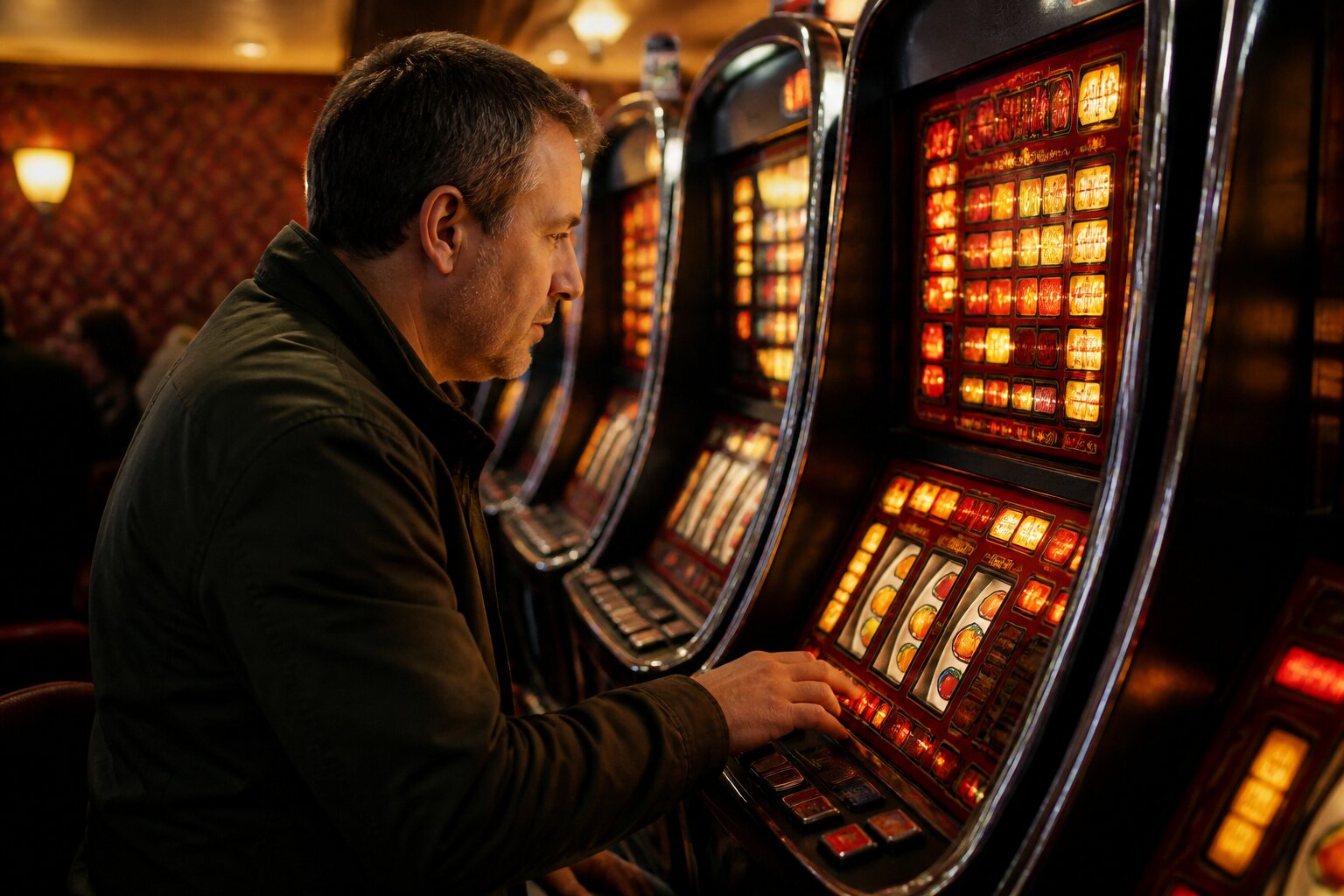
Ever wondered why some people refer to fruit machines as “puggies”? If you’ve heard the term in pubs, arcades or among friends, it can sound curious and a little old-fashioned.
This article explores where the name came from, how it spread, and what it means today. Along the way you’ll find regional differences, common misconceptions and a bit of cultural context to make sense of the nickname.
What Is a Fruit Machine?
A fruit machine is a gambling machine commonly found in pubs, arcades, betting shops and casinos across the UK. The reels display fruit symbols such as cherries, lemons and oranges, and players insert money and activate the reels to try to line up matching symbols for a payout.
These machines are regulated and must meet legal standards that ensure outcomes are fair and transparent. Operators provide information about odds and prizes, and venues offer tools to help people manage their play and seek support if needed. Fruit machines are intended as entertainment; players should choose stakes and sessions that fit their own budget.
Where Does the Word "Puggie" Come From?
“Puggie” is particularly associated with Scotland and appears in Scottish slang from the early to mid-20th century. Historical references show the term applied to slot machines and other gaming devices that were common in public places such as arcades, fairgrounds and some social clubs. The term carried a local, informal tone and was often used alongside other regional expressions.
One suggested derivation links it to the word “puggy,” used for small hand-operated machines, though the exact linguistic root is not fully certain. Linguists have noted similarities with other dialect words for small, portable or hand-cranked devices, but no single definitive source has been agreed.
By the 1950s the word was widely used in Scottish communities to describe both lever-operated machines and the early mechanical fruit types. Its survival into modern speech reflects how everyday language can preserve local terms for familiar objects, and how regional vocabulary can remain in use long after the original machines have changed or disappeared.
How Did the Name Puggie Become Popular in the UK?
“Puggie” gained traction in Scottish cities such as Glasgow and Edinburgh where fruit machines were a regular sight in communal spaces. People used the nickname in conversation and local media, which helped embed it in regional vocabulary.
As people travelled and media crossed regional boundaries, the term moved beyond Scotland, though it did not replace other names elsewhere in the UK. In England and Wales the phrases “fruit machine” and “slot machine” remained dominant, while “puggie” stayed strongest in Scottish contexts and in works that reflect Scottish life.
The word’s persistence owes as much to everyday speech and storytelling as it does to any single cultural influence.
Regional Variations: How Are Fruit Machines Known Across the UK?
Across the UK different names reflect local habits and settings. In Scotland you are likely to hear “puggie,” especially in community venues. In England and Wales, “fruit machine” is common because of the classic fruit imagery on the reels. In casinos and in younger circles, “slot machine” or “slots” is frequently used, mirroring wider international language.
These regional names show how people adapt a basic object to local talk and tradition. They also help explain why visitors might hear different words for the same machine depending on where they are.
If you come across a new term, it usually points to local habit rather than a technical difference in gameplay or payout.
Are There Any Myths or Misconceptions About the Term "Puggie"?
Several myths swirl around the name “puggie,” particularly among people outside Scotland. One false idea is that a puggie denotes a special type of machine with different odds or hidden rules. In truth, the term is a regional nickname and does not imply different mechanics or payouts.
Another misconception ties the word to illicit activity. Historical use is rooted in everyday language, not criminal practice. Finally, some suggest that knowing regional names offers an advantage in playing; regulated machines operate to the same standards, so a name does not change how a machine functions.
Clearing up these misunderstandings helps the term be enjoyed as part of local culture rather than as a source of false promises.
How Has the Term "Puggie" Evolved Over Time?
Language shifts with technology and habit, and “puggie” is no exception. As mechanical machines gave way to electronic and then online formats, broader terms such as “slots” became more common, especially among younger people and in digital contexts. Still, “puggie” remains in use where local speech preserves older phrasing.
Modern gaming terminology has been shaped by international trends, apps and websites, but regional words often survive in everyday conversation and in cultural media that highlight local settings.
Venues and operators now balance contemporary language with the need to provide clear information and support tools for players, ensuring games are presented responsibly while acknowledging how people like to refer to them.
Why Does the History of the Term Matter to British Culture?
Words such as “puggie” offer a small but revealing window into local history and identity. They reflect how communities name familiar objects, and how those names carry memories of social life, places and everyday routines.
Knowing where terms come from helps preserve regional speech and provides context for cultural references in film, literature and conversation. It also reminds us that language and leisure are intertwined parts of social life.
Appreciating this history can be done alongside encouraging safe play and clear information for anyone using these machines. The name “puggie” is a piece of living vernacular that links past and present in British culture, and recognising that connection completes the picture.
This is the end of the article; the background and use of “puggie” now sit clearly in their historical and cultural context.
**The information provided in this blog is intended for educational purposes and should not be construed as betting advice or a guarantee of success. Always gamble responsibly.