
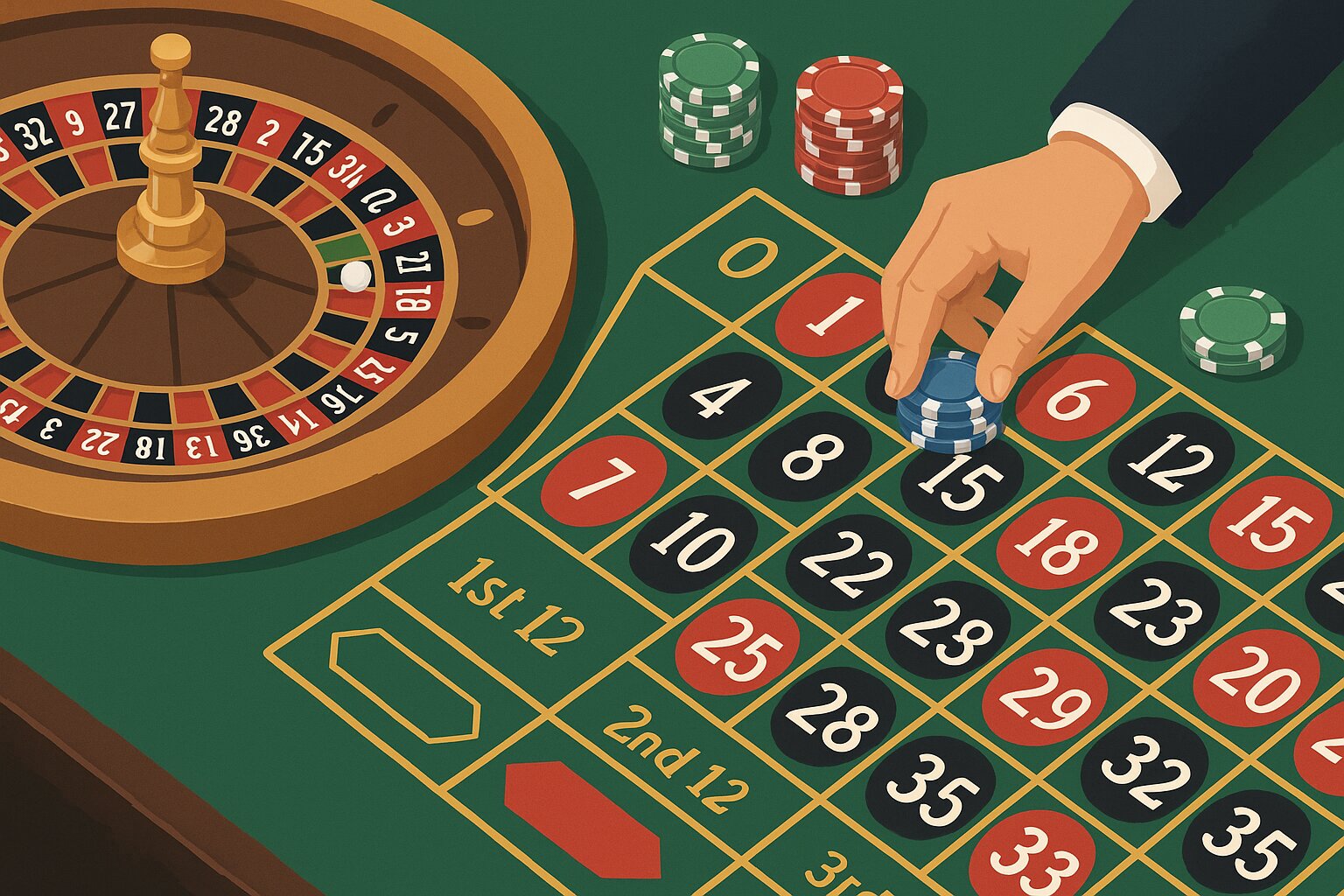
There are countless ways to play roulette, and one strategy you might have heard of is the Three-Two or 3/2 betting system. This approach is one of many tactics players use at the tables to give their betting a clear pattern.
If you’ve seen terms like “ploppy” in roulette discussions, this post will explain what the Three-Two method involves, how it’s put into practice and how it compares with other common systems.
Above all, this guide is for information only and is not a suggestion to use any betting system with the expectation of better results. Keep reading for a clear, direct look at the method and what you should consider before you play.
Understanding How the Three-Two System Works
The Three-Two system is simply a way of dividing your stake between two even-money bets each spin. You place three chips on one even-money option (Red/Black, Odd/Even, or 1–18/19–36) and two chips on a different even-money option at the same time. Using £1 chips as an example, that would be £3 on one choice and £2 on the other, for a total of £5 wagered.
If one of your selections wins, you recoup part of your units; if both win, you receive payouts on both. What this system does is structure how you spread risk across two broad parts of the table, rather than changing the probability of any outcome. The house edge remains unchanged.
Next, we’ll look at what the 3/2 label actually means in practice and how that ratio is applied.
What Does 3/2 Mean in Roulette?
‘3/2’ refers to the ratio of chips used in the Three-Two system: three units on one even-money bet and two units on another. It is a simple method for deciding how to split a single stake between two bets, typically two of the even-money options such as Red and Odd, or Black and Even.
For example, with a £5 total stake you would place £3 on Red and £2 on Odd. The numeric label simply describes that split; it does not affect the wheel or change the statistical odds of any spin. The expectation and house edge remain the same as for the underlying bets.
Key points to note about the 3/2 split:
- It standardises how you divide a stake between two bets, making staking decisions quicker.
- It is usually applied to even-money bets, which pay approximately 1:1.
- It is a staking method, not a strategy that alters probabilities or guarantees profit.
Many players use the ratio to keep their betting disciplined and consistent. It can be a useful way to manage simple staking without having to make ad hoc decisions each round. However, it is important to remember that no staking system can overcome the house edge or ensure long-term winnings.
Play responsibly and only wager what you can afford to lose. If gambling is causing you problems, seek help from appropriate support services.
Three-Two System: Table Layouts & Betting Patterns Explained
The system relies on the outside betting area of the roulette table where even-money options are marked. To use it, pick two of those options every spin and put three chips on one and two on the other, placing the chips in the appropriate boxes on the layout.
How you choose the two bets is up to you — some players prefer commonly paired options like Red and Odd — but the important point is the method of distribution, not which two specific bets you select.
While arranging bets neatly on the layout helps you track your play, remember that this is an organisational technique rather than a method to influence outcomes. Knowing this keeps expectations realistic as you play.
Why Is It Called the "Ploppy" Guide?
“Ploppy” is informal slang sometimes used to describe basic or commonly discussed betting methods. In poker and roulette chat, the term has a light, slightly teasing tone and is applied to straightforward strategies that many casual players use.
Calling a write-up a “Ploppy Guide” signals that it’s aimed at simplicity and accessibility rather than deep mathematical analysis. It’s a friendly label, not a judgement, and the purpose here is to explain the system in plain language so readers can decide for themselves if it suits their style.
If you want more detail about where this approach sits among other systems, the next section compares it to some alternatives.
What Are the Risks of Using the Three-Two System?
The chief risk with any betting pattern is financial: losses are possible and can grow if stakes rise to maintain a pattern. The Three-Two system does not change the underlying probabilities or the casino’s advantage, so it cannot protect a bankroll in the long run.
A common pitfall is assuming a system will recover losses or reduce the chance of extended losing runs; in practice, organised staking only shapes how wins and losses are distributed. If a player increases bet sizes beyond their means to keep the pattern, that can lead to larger losses.
Keeping bets sensible and aligned with a personal budget helps mitigate these risks. The system may make play more predictable, but it does not eliminate the possibility of losing money.
Is the Three-Two System Suitable for Beginners?
Yes — the Three-Two system is easy to learn and follow, which is why many new players find it appealing. Its predictable staking makes it simple to track spend and see how each spin affects your balance. For that reason it can be a good starting point for anyone who wants a clear, repeatable routine at the table.
At the same time, beginners should be aware that ease of use is not the same as an advantage. The system does not change the underlying house edge, so there is no guarantee of profit. Learning the table layout, familiarising yourself with bet types and setting sensible limits are useful priorities when starting out.
Practical steps for newcomers include:
- practising with free-play or low-stakes games to get comfortable without risking much money
- deciding a strict session budget and a stop-loss limit before you begin
- knowing when to take breaks so decisions do not become hurried or emotional
If you prefer a simple routine that keeps decisions to a minimum, 3/2 provides that structure without demanding complex calculations. Remember to gamble responsibly and only wager what you can afford to lose.
Comparing the Three-Two System to Other Roulette Approaches
Compared with progressive systems that alter stakes after wins or losses, the Three-Two approach is static: you keep the same ratio each round. Systems like the Martingale or Fibonacci involve increasing or changing bets to chase recovery, which can escalate stakes quickly and expose players to higher financial risk.
Flat betting — placing the same amount on the same bet every time — is even simpler than 3/2 and keeps bankroll movement steady. Some players combine inside and outside bets to change variance and potential payouts, which is a different style of play than the steady pattern offered by Three-Two.
All of these methods are choices about money management and experience rather than ways to change the mathematics of the game.
Myths & Misconceptions About the Three-Two Roulette System
A frequent misconception is that a fixed ratio like 3/2 can improve your chances of success. In truth, the system only prescribes how to allocate stakes; it does not alter the probabilistic structure of each spin. The house edge and the equal probability of each outcome remain unchanged, so no staking plan can turn a negative expectation into a positive one.
Another myth is that patterns on the table influence future outcomes. Every spin is independent, and past results do not affect future ones. Believing otherwise is an example of the gambler's fallacy and can lead to increasingly risky decisions, such as chasing losses or increasing bets without justification.
Treating the system as an organisational tool rather than a shortcut to consistent gains helps keep expectations sensible and play more enjoyable. Use it to manage bet sizing, stick to a pre-set bankroll, and set win and loss limits to reduce harm. Remember that betting should be recreational, not a way to guarantee income.
Responsible Roulette Play: What Should You Consider?
Keeping play within personal limits makes roulette more sustainable as entertainment. Before you begin, decide on a budget and an amount of time you’re prepared to spend, and stick to those boundaries. Taking breaks helps maintain perspective and prevents play from becoming hurried or reactive.
Avoid trying to recover losses by increasing stakes beyond what you planned. If gambling feels harder to control at any time, support services are available and confidential help can be found through recognised organisations such as BeGambleAware. You must be 18 or over to gamble legally in the UK.
Play with awareness: a clear plan for stakes and time, and a readiness to stop when those limits are reached, will keep the experience constructive.
Final note: the Three-Two system is a simple, structured way to place bets that some players prefer for its clarity. Use it if it suits your style, but keep expectations realistic and always safeguard your own wellbeing while playing.
**The information provided in this blog is intended for educational purposes and should not be construed as betting advice or a guarantee of success. Always gamble responsibly.