
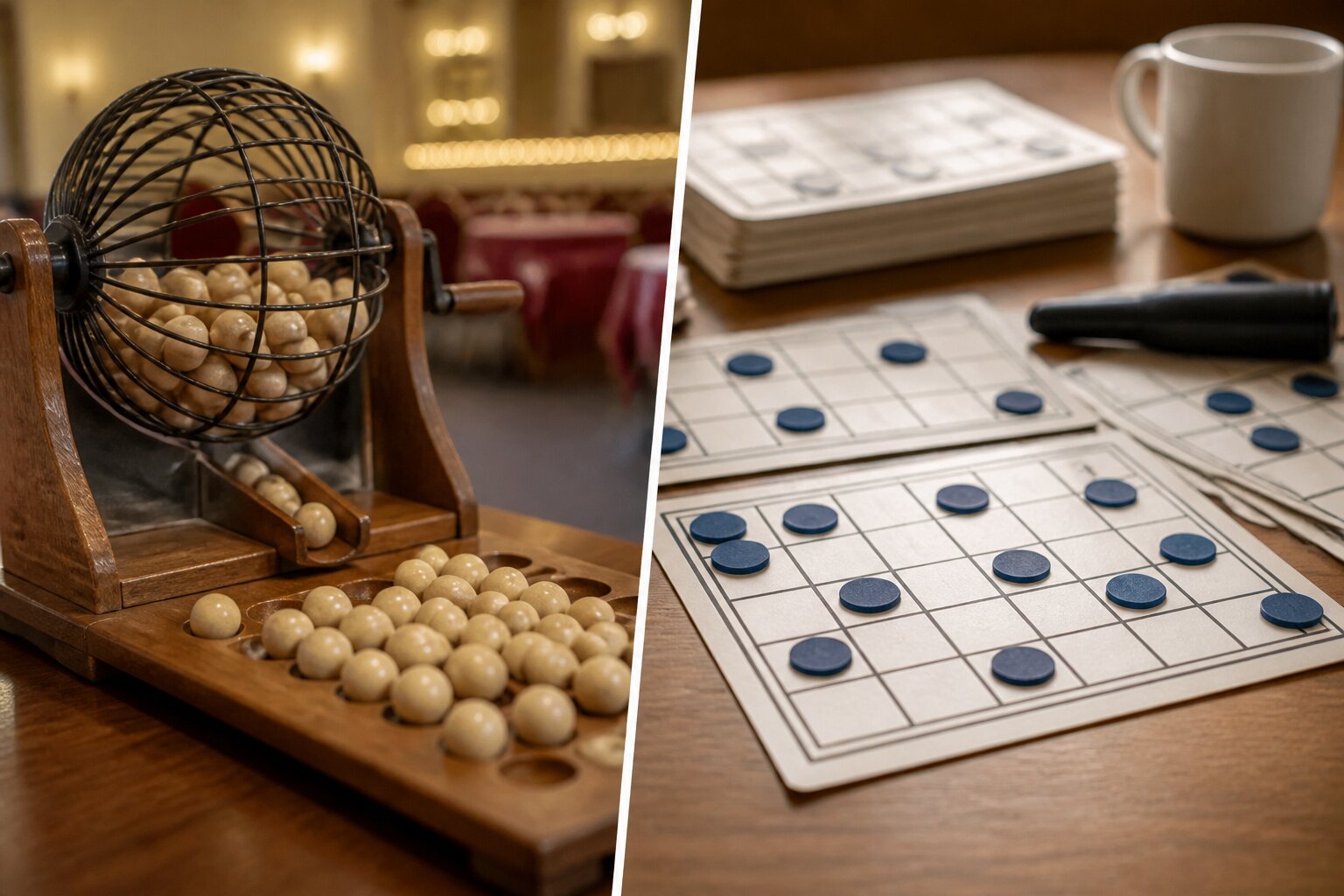
If you’ve ever wondered what sets tombola and bingo apart, you’re not alone. Both games turn up at fairs, online platforms, and local clubs, but they offer different experiences and rhythms.
This post explains how each game works, outlines their rules, and offers clear tips for joining in—whether you’re trying a new hobby or looking for something social to do. Read on to discover which one might suit you best.
What Is Tombola?
Tombola is a traditional raffle-style game commonly played at community events and fundraisers. Players buy numbered tickets; those numbers are then mixed and drawn, and matching tickets win the prizes allocated by the organiser. Some events list prize numbers in advance, while others reveal winners as the draw progresses.
Tombola tends to be quick and straightforward: you buy tickets, wait for the draw, and collect your prize if your number is called. Prizes vary widely, from small treats at school fêtes to larger items at charity events. The main appeal is its simplicity and the immediate result when a ticket is pulled.
Keep in mind that tombola is an entertainment activity. Set limits on spending and time so the experience stays enjoyable.
What Is Bingo?
Bingo centres on numbered cards and a sequence of drawn numbers. In the UK, the most common format is 90-ball bingo, where each card has three rows and nine columns. Numbers are drawn one at a time by a caller or by an automated system, and players mark off any numbers that match those on their cards.
Games are organised around specific winning patterns — in 90-ball bingo these typically include single lines, two lines, and a full house. Sessions follow a set structure, with rounds and prize announcements that create a communal atmosphere as players watch the game unfold together.
Bingo has a strong social element: the pacing, the call-and-response of the room, and the shared anticipation make it distinct from a one-off draw. Like tombola, it should be approached with limits in mind so it remains a pleasant pastime.
Key Differences Between Tombola and Bingo
At a glance, tombola and bingo share numbered elements, but their pace and participation differ. Tombola operates like a raffle: tickets are bought and then drawn, producing immediate winners. Bingo is a communal game that unfolds over several rounds as numbers are announced and players aim for patterns on their cards.
Bingo generally involves more structure, with rounds, a caller, and repeated opportunities to win within a session. Tombola is typically shorter and resolves quickly once tickets are drawn. The social dynamics also contrast: bingo’s format encourages conversation and collective tension as the game progresses, whereas tombola is usually a brief, individual moment of suspense.
Both are designed for entertainment. Keep spending within a set budget and play in a way that suits you.
How Do the Rules of Tombola Work?
A tombola draw begins when tickets are sold and placed into a mixing container. Each ticket carries a unique number. The organiser mixes the tickets thoroughly and draws them one at a time. If a drawn number matches a winning entry, the ticket-holder claims the prize associated with that number. Depending on the event, prizes may be announced beforehand or revealed as the draw continues.
Because the mechanism is simple, games are often easy to follow for newcomers. Events differ in prize structure and the total number of draws, so checking how an organiser runs their tombola before buying tickets helps set expectations. Treat any win as an added bonus rather than a guarantee, and keep spending to an amount you’re comfortable with.
A quick note before we move on: if you like a faster, lower-commitment game, tombola’s short draws can be appealing — but if you prefer something that builds over time, bingo offers that steady progression.
How Do the Rules of Bingo Work?
Bingo starts when players obtain one or more cards, each populated with random numbers. During a session, numbers are called out and players mark off matching numbers on their cards. The game’s rule-set defines winning patterns — for example, a single completed line, two lines, or a full house in 90-ball bingo. When a player completes the required pattern, the organiser verifies the card and awards the prize for that round.
Different variants use different card layouts and patterns; 75-ball bingo, more common in other countries, presents a different grid and winning shapes. Sessions usually note the rules and prize structure at the outset so everyone understands what to aim for and what can be won that day.
Bingo’s appeal lies in its gradual build-up and the shared excitement as rounds progress. It suits people who enjoy the communal tempo of a game and who like tracking patterns across several cards.
How to Play Tombola: Step-by-Step Guide
Playing tombola involves a few straightforward stages that most organisers explain before the draw begins. You choose how many tickets to buy, each granting a numbered stake in the draw. Tickets are mixed together and drawn in turn, with prize-winning numbers announced as the draw proceeds. When a drawn number matches one you hold, you present the ticket to claim the corresponding prize.
Events vary in how they present prizes and how many draws they run, so it helps to check the event’s format beforehand. Some tombolas allocate prizes from a pre-published list, while others reveal prizes as winners are drawn. That quick, reveal-style format makes tombola easy to join mid-event or as part of a larger social gathering.
How to Play Bingo: Step-by-Step Guide
Bingo sessions follow a predictable flow that organisers outline before play begins. Players acquire cards and keep them at hand while numbers are drawn and announced. As numbers are matched on a card, they are marked, and the player watches for the specific pattern required to win that round. When a player completes the pattern, they signal for verification and, if confirmed, receive the prize for that stage of the session.
Sessions often include several rounds with different prizes and may allow players to use more than one card at once, increasing the variety of ways to win. The caller or system keeps the game moving, and organisers usually restate the rules and prize structure so everyone is clear on the objectives for each round.
Are There Myths or Misconceptions About Tombola and Bingo?
A few misconceptions recur around these games and are worth clearing up. One is the notion that certain numbers or timings improve outcomes; in both tombola and bingo, draws are designed to be random and impartial. Another is that these games are a dependable source of income — they are set up for entertainment, not as a financial strategy.
Age stereotypes can also be misleading. While both games have strong followings among older players, people of many ages take part, especially online where formats vary and sessions run at different times. Knowing how the game you’re joining is structured helps set realistic expectations about prizes and the social element you’ll encounter.
Which Is More Popular in the UK?
Bingo has broader reach across the UK, with millions taking part annually in halls, clubs, and online platforms. Its organised sessions and social format have helped keep it widely played, from traditional evening games in dedicated venues to late-night online sessions that attract different age groups.
Tombola remains common at local events, school fêtes, and fundraisers, where its raffle-style simplicity fits short community gatherings well. Its quick, low-cost tickets and immediate draws make it especially popular for charity events and neighbourhood socials where people want a fast, easy way to take part.
Both have places in social life:
- Bingo functions as a structured group activity that encourages longer social interaction and regular attendance.
- Tombola serves as an efficient, immediate draw to raise funds or add excitement to an event, often requiring minimal time and expense from participants.
Choose the format that matches the occasion and the type of engagement you prefer. Remember to follow legal age limits and gamble responsibly where applicable.
Which Game Should You Choose?
The choice comes down to tempo and social preference. Tombola suits people who want a short, decisive draw and limited time commitment. Bingo is better if you enjoy a sequence of rounds and the communal feeling of a game that unfolds over time.
Think about whether you prefer instant results or collective anticipation. Decide how much time and money you’re willing to spend, and pick the game that fits those limits and the kind of atmosphere you enjoy.
Whichever you try, approach play as entertainment rather than a way to earn, keep to a budget, and focus on the social and fun aspects. If you want to try one now, check the event details or the game session information to be sure it matches your expectations and enjoy the experience.
**The information provided in this blog is intended for educational purposes and should not be construed as betting advice or a guarantee of success. Always gamble responsibly.