
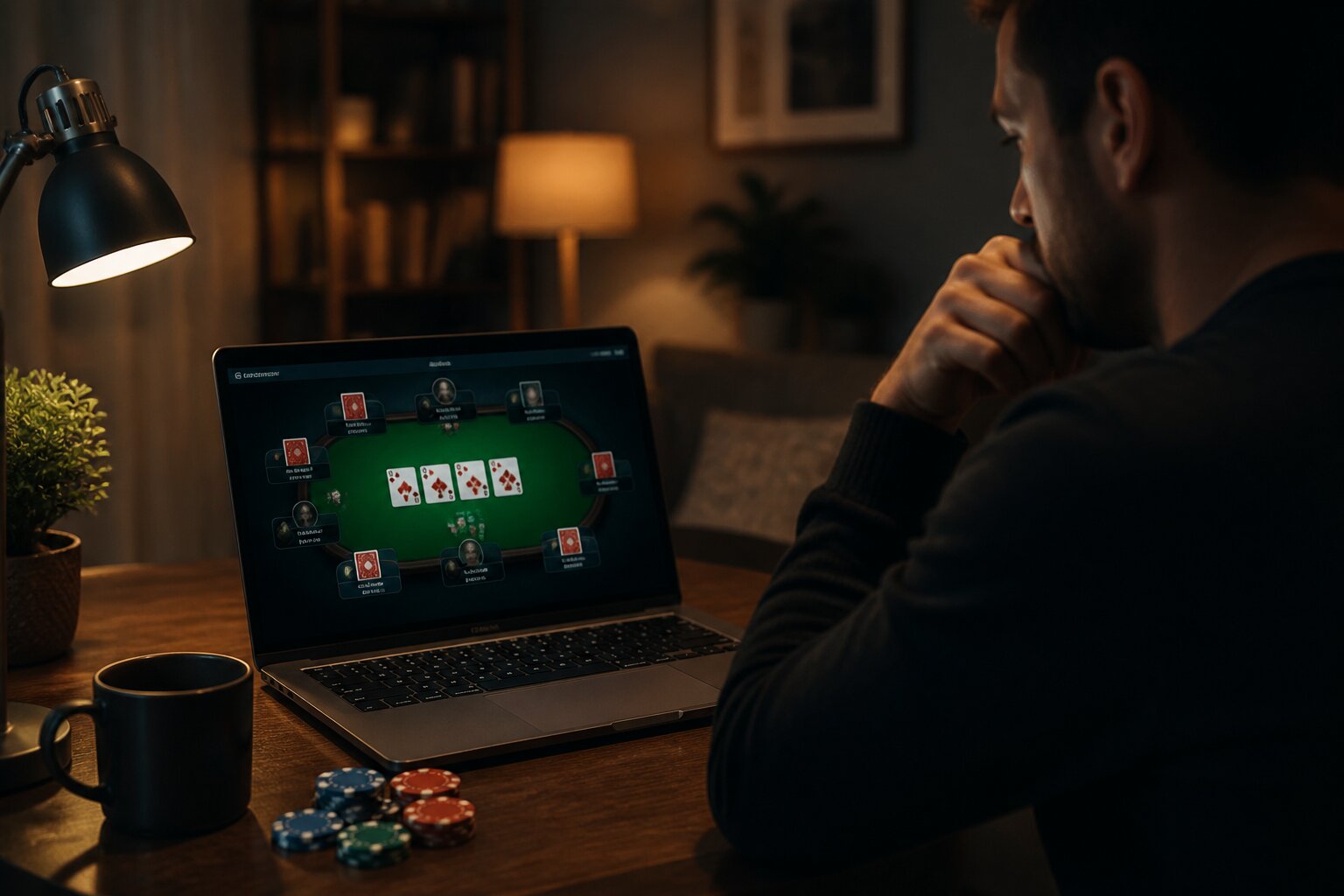
Has online poker lost its spark, or is there still life in the game across the UK? With headlines about fewer players, rising competition and changes in regulation, it’s easy to assume the scene has faded.
The picture is more nuanced. New sites, shifting player habits and ongoing technological change mean the game is evolving rather than vanishing.
Curious about what’s really going on? Read on to find out who’s playing, what has changed and whether there’s still a place at the virtual table for you.
What Is the Current State of Online Poker in the UK?
Online poker remains an active part of the UK’s gambling market, but it operates in a much more regulated and mature environment than in the early 2000s. Over the years the focus has shifted from rapid expansion to maintaining fair play, player protection and secure payment systems.
Sites that operate here must meet strict regulatory standards. For players this translates into verified accounts, secure transactions and routine checks that aim to keep the games honest. These systems make joining a site a little more involved than it once was, but they also mean a safer experience for everyone who plays.
Age verification is standard practice: you must be at least 18 to play, and operators verify identity before permitting real-money play. Alongside this, many platforms give players options to manage their activity and exposure in ways that suit them.
Has the Popularity of Online Poker Declined?
Interest in online poker peaked during a very specific era when a few high-profile tournament wins and rapid site growth drew mass attention. Since then participation has stabilised at a lower level, with thousands of regular players still taking part each month across the UK.
Part of the shift reflects broader changes in how people spend their time online. Competitors such as streaming services, social apps and other forms of gambling attract some casual players who might once have tried poker. At the same time, the game continues to attract players who prefer skill-based competition—those who enjoy long-term strategy, study and the challenge of reading opponents.
Tournaments, cash games and new formats still bring activity to the tables. In short, poker’s audience is smaller than during the boom years, but it is steady and engaged.
Driving Forces Behind Changes in the UK Online Poker Scene
Several trends help explain how online poker has adapted. Cultural shifts mean more entertainment options compete for attention, which has influenced player numbers and session lengths. Technology has altered how people play: mobile-first design and quicker game formats appeal to different kinds of players than traditional long-form tables.
Regulation has also played a central role. Evolving rules aim to improve player protection and transparency, which can slow sign-up processes but raise overall standards. Operators respond by improving user experience and adding features that help players tailor how they play.
Taken together, these forces show a market that is reacting to modern expectations rather than simply contracting.
Is It Still Safe & Legal to Play Online Poker in the UK?
Playing online poker in the UK is legal for those aged 18 or over, provided they choose an operator authorised to offer services here. Licensed platforms are regulated by the UK Gambling Commission and must meet ongoing compliance requirements to operate legally.
Operators holding a UK licence are required to protect customer information and funds, and to run games fairly. Typical safeguards include:
- protecting personal data and using industry-standard encryption for communications and transactions,
- using secure payment methods and segregating player funds from operational funds,
- ensuring games are run to clear technical standards, including independent auditing of random number generators.
Before creating an account it makes sense to confirm a site’s credentials and review its security measures. Trustworthy operators typically publish details of their licence, information about third-party audits, and the player protection tools they provide.
These safeguards help ensure the environment is fair and that players’ rights are respected. Responsible gambling measures are also a licensing requirement, so licensed sites must offer deposit limits, self-exclusion and links to support services for players who need them.
Common Myths About the Decline of Online Poker
Conversation about poker’s fortunes often breeds myths. One widespread belief is that cheating and automated accounts have overwhelmed legitimate play, making games unusable. While any online activity faces security threats, reputable operators invest heavily in detection and prevention to keep tables clean.
Another misconception is that poker has no place among today’s online options. In reality, the game attracts a core of committed players and continues to innovate with new formats and tournament structures aimed at different tastes and time commitments.
Where claims about the game’s demise persist, the evidence tends to show an industry adapting rather than collapsing.
Are Bots and Cheating Really Killing Online Poker?
Challenges from bots and cheating software exist across online gaming, but licensed operators deploy a range of tools to counter them. These include behavioural monitoring, pattern analysis and account reviews. When irregularities are detected, sites suspend accounts and investigate, with penalties for confirmed abuse.
Because fairness is a regulatory requirement, operators report on their integrity measures and take enforcement seriously. That makes playing on authorised platforms markedly safer than on unregulated sites.
How Have Online Poker Platforms Adapted?
Platforms have modernised in several practical ways. Security improvements now include stronger account verification, two-factor authentication, and encryption of transactions to protect both personal data and funds. Many sites also employ continuous fraud detection systems and routine vulnerability testing to reduce the risk of unauthorised access.
User interfaces are optimised for mobile play and quicker session types, with responsive layouts that work on smartphones and tablets. Table displays are clearer, controls are simpler, and new quick-fold and turbo formats let players fit games into shorter time windows. These changes make the experience smoother for players who expect responsive apps and readable table information.
Operators have also introduced features that let players control their involvement, such as:
- deposit limits and loss limits to restrict how much can be added or lost over chosen periods
- wagering or session timers to help manage time spent playing
- clearer account histories and transaction statements to track play over time
- tools for setting cooling-off periods and self-exclusion when needed
In addition, independent audits and continuous monitoring support the integrity of games and reassure players that results are handled properly. Many platforms publish third-party testing certificates for random number generators, perform regular fairness checks, and maintain transparent complaint procedures to resolve disputes.
These adaptations reflect the dual aim of improving usability while meeting regulatory expectations. They balance better player experience with safeguards required by regulators, including age verification, anti-money laundering checks, and accessible responsible gambling options.
The Future of Online Poker in the UK: What Can Players Expect?
Looking ahead, online poker will likely continue to blend technical innovation with regulatory oversight. Better mobile experiences and more varied game formats are probable, as operators seek to serve both serious players and those with less time to spare.
Regulation will remain a key influence, shaping how operators present information and the level of support they offer to players who need help. Expect incremental improvements in transparency and support services that aim to make participation clearer and easier to manage.
Overall, the scene will keep adapting to player habits and technological possibilities, while regulation ensures the basic rules of fair play and player protection continue to be upheld.
Final Thoughts: Is Online Poker Really Dead?
Online poker in the UK has changed, but it is not dead. A core community of players continues to take part in tournaments and cash games, supported by platforms that invest in security, fair play and user experience. Regulation has tightened the environment, and that has reshaped how operators run their services, but it has also raised standards and protections.
If you choose to play, do so on an authorised site and be mindful of the tools available to manage your play. The industry is not disappearing; it is evolving into a more controlled and transparent space where committed players can still find competitive, rewarding poker.
**The information provided in this blog is intended for educational purposes and should not be construed as betting advice or a guarantee of success. Always gamble responsibly.