
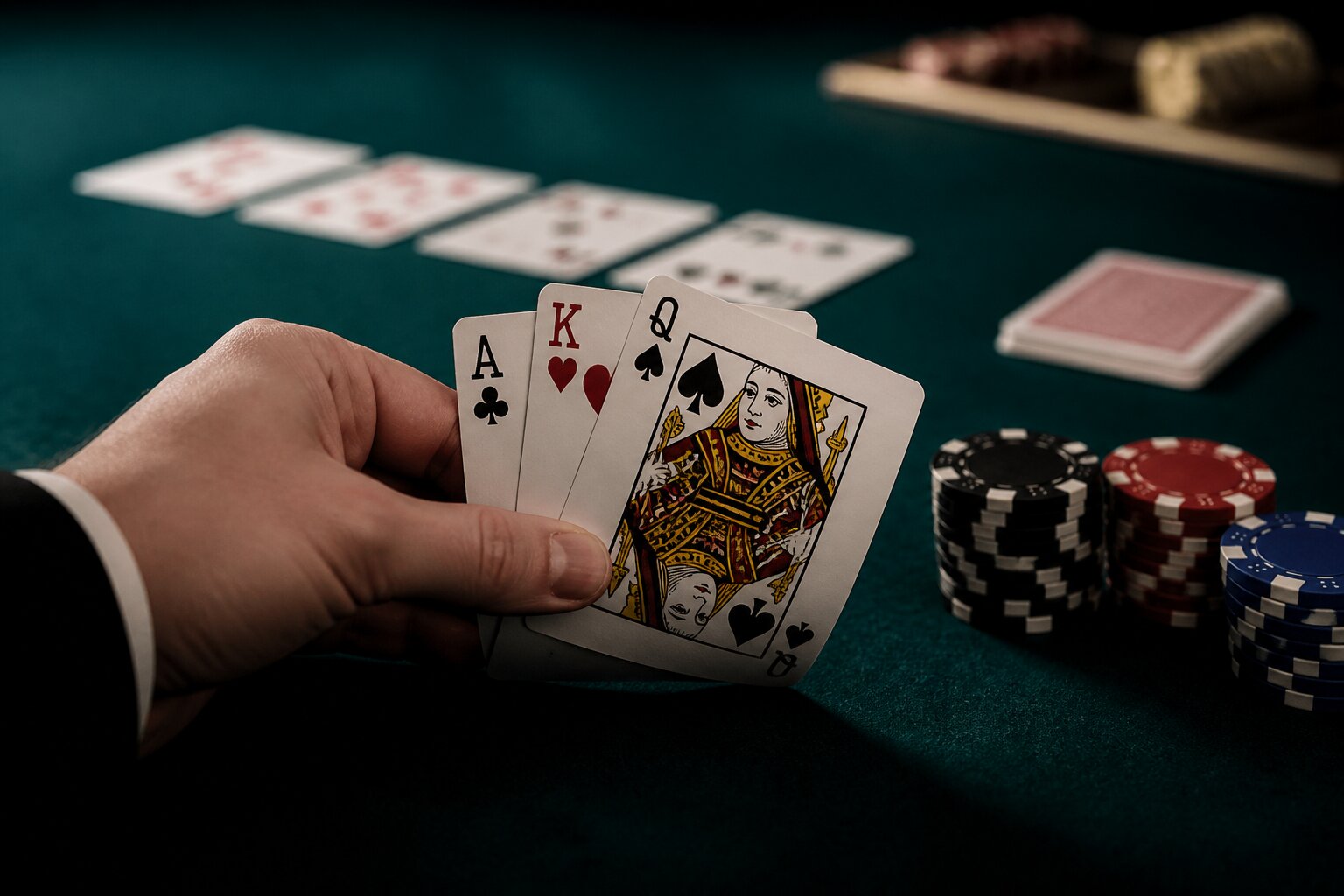
If you enjoy quick, card-based games that combine simple rules with readable strategy, 3 Card Brag is worth a try. It’s a compact game that gets going fast and keeps everyone involved each round.
You’ll need only a few basic rules and an understanding of the hand rankings to take part. This guide walks through how the game plays, what the hands mean, and what to expect at the table, with clear examples so you can jump in with confidence.
Before you start, set limits for time and money so playing stays an enjoyable activity and never a way to earn income.
What Is 3 Card Brag?
3 Card Brag is a traditional British card game played with a standard 52-card deck. It is usually enjoyed by 2 to 6 players, though casual groups sometimes adapt the numbers to suit the table. Rounds are brief and energetic, which helps keep the pace lively and makes the game easy for newcomers to pick up.
The objective is straightforward: make the best three-card hand and win the pot through betting. Bluffing is often part of play, with players using wagers and raises to try to force folds or extract value from weaker hands.
Play typically centres on a combination of skills and instincts, including:
- careful observation of opponents and their betting patterns
- strategic betting choices and pot management
- reading opponents’ behaviour and timing
Every round depends entirely on the cards dealt, so each hand brings fresh uncertainty and quick decisions. This mix of luck and strategy is what gives 3 Card Brag its enduring appeal at social tables and organised games alike.
How Do You Play 3 Card Brag?
The round starts when every player puts an agreed stake into the pot, called the ante. The dealer then deals three cards face down to each player. Players look at their own cards but keep them concealed from others.
Betting proceeds clockwise. On a turn a player may match the current stake (see), raise, or fold. Betting continues until all but one player has folded, or until the remaining players agree to stop betting and go to a showdown. At showdown, players reveal their cards and the strongest hand wins the pot.
Different groups may use slight rule variations, so it’s sensible to confirm the house rules before play begins. Keep your play within preset limits and don’t risk more than you can afford to lose.
Essential Rules of 3 Card Brag
The basic rules keep gameplay brisk and consistent:
- Each player is dealt three cards face down from a standard deck.
- An initial stake (the ante) is placed into the pot before cards are dealt.
- Players may look at their own cards but must keep them hidden from others.
- Betting moves clockwise; players can fold, see (match the bet), or raise.
- If a player folds, they forfeit any stake already placed in that round.
- A showdown occurs if two or more players remain after betting; the best hand takes the pot.
- Players who are called on must show their hands at the end of the round.
- Bluffing is allowed, but agreed rules and fair play keep the game enjoyable for everyone.
House or regional variations may alter details such as betting structure or tie-break rules, so clarify these points before you begin.
Hand Rankings Explained
Understanding hand rankings tells you immediately what beats what at showdown. Hands are evaluated solely from the three cards each player holds; the stronger the combination, the higher it ranks in the list that follows.
What Are the Winning Hands in 3 Card Brag?
- Prial (Three of a Kind): Three cards of the same rank. Among prials, threes are traditionally ranked highest in some variants, so check the rules in use.
- Running Flush: Three consecutive cards all in the same suit (for example, 4, 5, 6 of hearts).
- Run (Straight): Three consecutive cards not all of the same suit (for example, 7, 8, 9 of mixed suits).
- Flush: Three cards of the same suit that are not in sequence.
- Pair: Two cards of the same rank plus one unrelated card.
- High Card: When no other combination exists, the highest single card decides.
When two players hold the same type of hand, the ranks of the cards compare to determine the winner, such as Q-K-A beating 2-3-4 in a run. Because local rules can differ—especially on prial ordering—agree the specifics before play begins.
Gameplay: Step-By-Step Guide
A typical round follows a clear flow so everyone understands what happens and when.
First, all players place the ante to form the pot. The dealer deals three cards face down to each player, who then privately checks their hand. Betting begins with the player to the dealer’s left and moves clockwise. Players choose whether to see, raise, or fold based on their hand and how they judge opponents’ behaviour.
If a single player remains after others fold, that player wins the pot without revealing cards. If two or more players continue to the end of betting, a showdown determines the winner by comparing hand rankings. Stakes collected in the pot go to the player with the highest-ranked hand according to the agreed rules.
Keeping clear limits and taking breaks helps maintain a healthy rhythm to play. Treat the game as entertainment and avoid chasing losses.
What Sets 3 Card Brag Apart from Other Card Games?
Three features give 3 Card Brag its character. First, only three cards per player keeps each hand compact and the pace fast. Second, bluffing has a notable role: betting can persuade opponents to fold even when they hold decent cards, which adds a psychological layer. Third, the hand hierarchy differs from many poker variants—for example, prials hold a top position that changes how players value pairs and runs.
These traits mean rounds are social and conversational without being complicated, which is why groups often use the game as a quick and engaging diversion. Before you join a game, agree the exact hand ordering and any special rules to avoid confusion.
Common Myths About 3 Card Brag
A few persistent ideas about the game can mislead new players. One is that a fixed system exists to guarantee wins; no betting method can alter the cards you are dealt. Another is that bluffing alone will consistently secure victory; while it’s a useful tool, it must be balanced with sensible betting and awareness of opponents. Finally, some think past outcomes reveal patterns that predict future deals, but each hand is independent of previous rounds.
Play with agreed limits and a clear understanding that outcomes are determined by the cards and the choices players make. That keeps the focus on enjoyment and fair play rather than on trying to find a foolproof strategy.
This guide should give you the confidence to join a game, follow the action at the table, and take part in the betting with a clear sense of the rules and what each hand means.
**The information provided in this blog is intended for educational purposes and should not be construed as betting advice or a guarantee of success. Always gamble responsibly.