
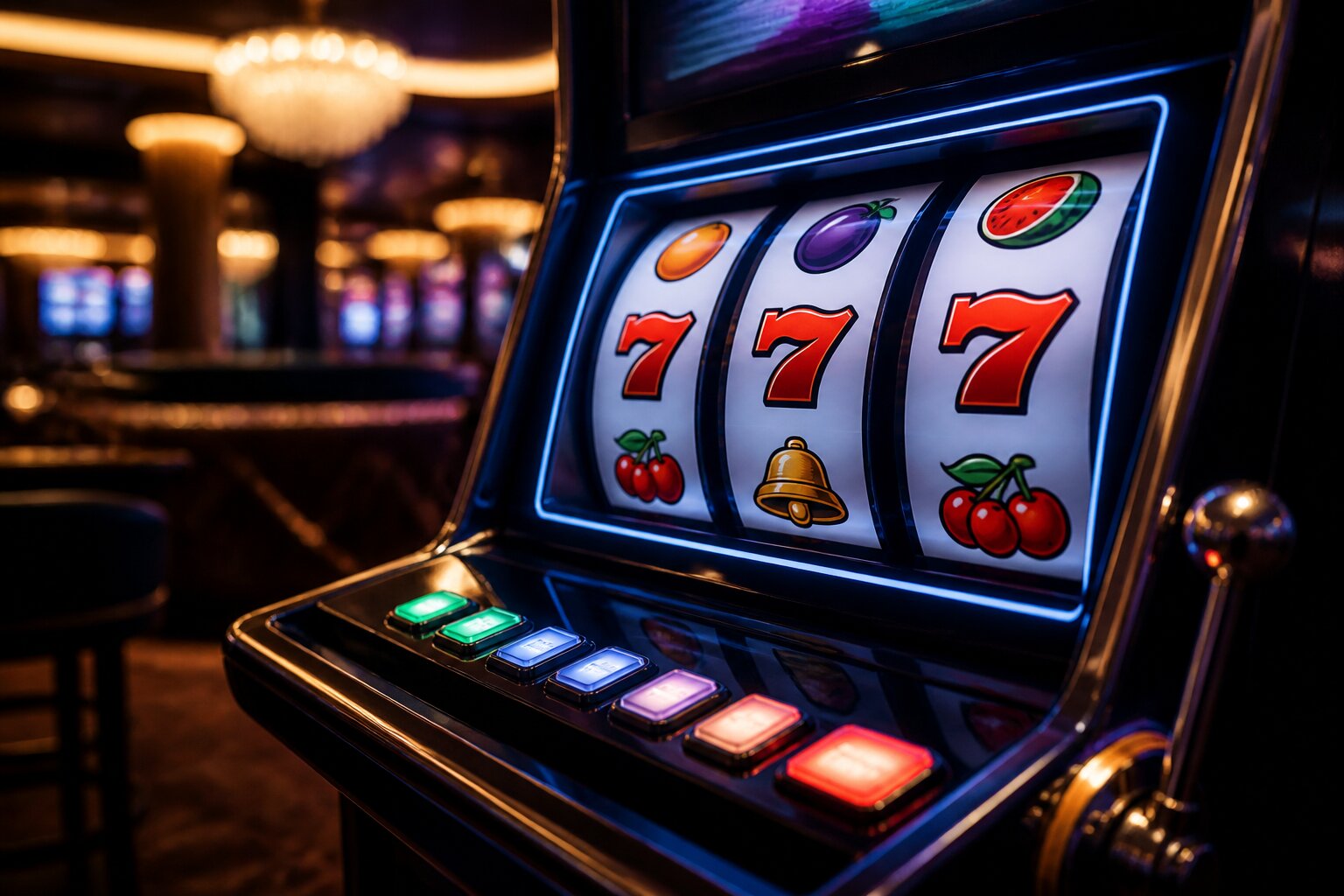
Ever wondered what really goes on behind those flashing slot reels? If you’ve ever felt unsure when you see a slot machine, you’re in the right place.
This guide breaks down how slots work, how payouts are set, and the terms you’ll encounter. Read on — each section builds on the last so you’ll leave with a clear picture of how these games operate.
Before you start: you must be 18 or over to play in the UK and it’s sensible to set a budget and stick to it.
What Are The Basic Rules Of Slot Machines?
Playing a slot is straightforward, which is part of its appeal. You decide your stake, press the spin control, and watch the reels stop to reveal symbols. Wins happen when certain symbol combinations land on active paylines.
Most online slots let you change your bet size and often choose how many paylines to activate. Payouts and what counts as a win are shown in each game’s paytable, so it’s worth checking that before you play.
The random nature of each spin means no previous result affects the next one. Keep bets at levels you’re comfortable with and treat the game as entertainment.
How Do Slot Machines Work?
Modern slots use a Random Number Generator, or RNG, a software system that generates results continuously and selects the outcome the moment you spin. Because the RNG runs independently for every spin, outcomes are unpredictable and cannot be influenced by players.
Game developers publish each title’s rules and technical settings, and independent test labs verify that RNGs and payout behaviour match what the game promises. That testing helps ensure the mechanics work as described rather than being altered during play.
Understanding that the RNG governs outcomes helps explain why strategies aimed at predicting results do not change how a game performs.
Understanding Slot Machine Symbols & Reels
Reels are the vertical columns that show symbols after a spin. Most slots use three or five reels, but some designs are more elaborate. Symbols vary by theme and by value: low-value symbols appear more often, while high-value symbols are rarer and pay more.
Special symbols change how a spin can pay out. Wilds act as substitutes to complete winning combinations, and scatters typically trigger bonus features regardless of paylines. Some games also include multipliers or expanding symbols that alter payouts when they appear.
Design and layout vary across titles, so checking the paytable and feature descriptions for each game is useful to understand how its symbols interact.
What Are Paylines & How Do They Affect Wins?
Paylines are the paths across the reels that define which symbol positions count for wins. They can run straight across, zig-zag, or take more complex patterns, and games can offer anything from a single fixed payline to hundreds of ways to win.
Playing more paylines increases the number of potential winning combinations, but it also raises the total stake required per spin. That trade-off between coverage and cost is worth considering when deciding how to play.
Because outcomes are determined by the RNG, the number of paylines affects only how many opportunities exist for a win on a single spin, not the odds behind each symbol landing.
Slot Machine Bonus Features Explained
Bonus features give slots variety and extra ways to win within a single game. Free spins are one common example: they grant a number of spins without deducting from your balance and are usually triggered by specific combinations such as scatter symbols. During free spins, standard game rules still apply, but special modifiers like extra multipliers or locked reels might be active.
Other bonuses include pick-and-reveal rounds, expanding reels, or interactive mini-games that award prizes based on which choices appear. These features are programmed into the game and their frequency and rewards are described in the paytable and feature guides.
Bonus features are designed to add depth and excitement. They do not alter the fundamental randomness of each spin, but they can change potential returns within individual sessions.
How Are Slot Machine Payouts Calculated?
Payouts are determined by the game’s paytable and the specific combination of symbols that land on active paylines. Each symbol has a set value and some combinations trigger fixed payouts, while others may activate multipliers or bonus sequences that change the final amount.
Under the hood, the RNG maps each spin to a set of symbol positions; the paytable then translates that result into a payout. The frequency and value of payouts are built into the game’s configuration and cannot be changed by players or operators during play.
Checking a game’s paytable before you play makes it clear which symbol combinations produce the largest returns, and how special features influence payouts.
What Is RTP & Why Does It Matter?
Return to Player, or RTP, is a percentage that describes how much, on average over a very long period, a game pays back to players from total stakes. An RTP of 96% suggests that, across many millions of spins, £96 is returned for every £100 wagered. Short-term results can vary widely from that long-term average.
Game developers set the RTP and independent auditors verify it. Knowing a title’s RTP gives a sense of its theoretical payout level compared with other games, but it does not predict what will happen in any single session.
Use RTP as one factor when choosing a game, along with volatility, paytable structure and whether you enjoy the game’s features and theme.
Are All Slot Machines Regulated & Fair?
Online slot games offered in the UK are subject to regulation and regular testing to confirm that they behave as advertised. Licensed operators must comply with UK Gambling Commission rules, and independent testing bodies routinely examine random number generator performance and verify advertised RTP values. Regulated operators are also required to make game rules and payout information available to players so you can see how a game is intended to work before you play.
Regulation helps ensure technical fairness and that game behaviour aligns with published information. It also provides an enforcement framework so non-compliant providers can be investigated and, where necessary, penalised or removed from the market.
Regulation additionally enforces consumer protections such as:
- account controls, including deposit limits and self-exclusion options
- formal processes for resolving disputes and handling complaints
Choosing platforms that publish clear game information and testing certificates gives extra assurance that the games operate according to their stated rules. Checking a site’s licence details, audit reports and available player protections is a sensible way to confirm a provider is operating under appropriate regulatory oversight.
Common Myths About Slot Machines Debunked
A number of persistent ideas about slots don’t hold up to how the games are actually designed. The notion that a machine can be “due” to pay out or that particular timings affect wins is inconsistent with the RNG-driven nature of modern slots. Systems that claim to guarantee wins misunderstand how outcomes are generated.
Similarly, altering how you press the spin control or the time between spins does not influence results. Those behaviours may feel meaningful, but the game’s outcome is decided by the RNG at the moment of the spin command.
Understanding these misconceptions helps set realistic expectations: slots offer a programmed structure of payouts and features, and outcomes are determined by the game’s mechanics rather than player actions.
Glossary Of Common Slot Machine Terms
Below are brief definitions of the most common terms you’ll encounter when exploring slots.
Reels
Vertical columns that spin and show symbols at the end of each turn.
Symbols
Images on the reels that form winning combinations according to the paytable.
Payline
A pattern across the reels that defines where matching symbols must land to produce a win.
Wild Symbol
A symbol that substitutes for others to help complete winning combinations.
Scatter Symbol
A symbol that often triggers free spins without needing to land on a payline.
Bonus Round
An additional feature or mini-game that offers alternative ways to win prizes.
Free Spins
Spins awarded by the game that do not deduct from the player’s balance, usually triggered by specific symbol combinations.
RTP (Return to Player)
The theoretical long-term percentage of total stakes returned to players, as set by the game’s design.
Stake
The amount wagered on each spin.
These definitions should make it easier to follow game rules and feature descriptions as you explore different titles. Enjoy learning about how slots work and choose games that match your preferences and your budget.
**The information provided in this blog is intended for educational purposes and should not be construed as betting advice or a guarantee of success. Always gamble responsibly.