
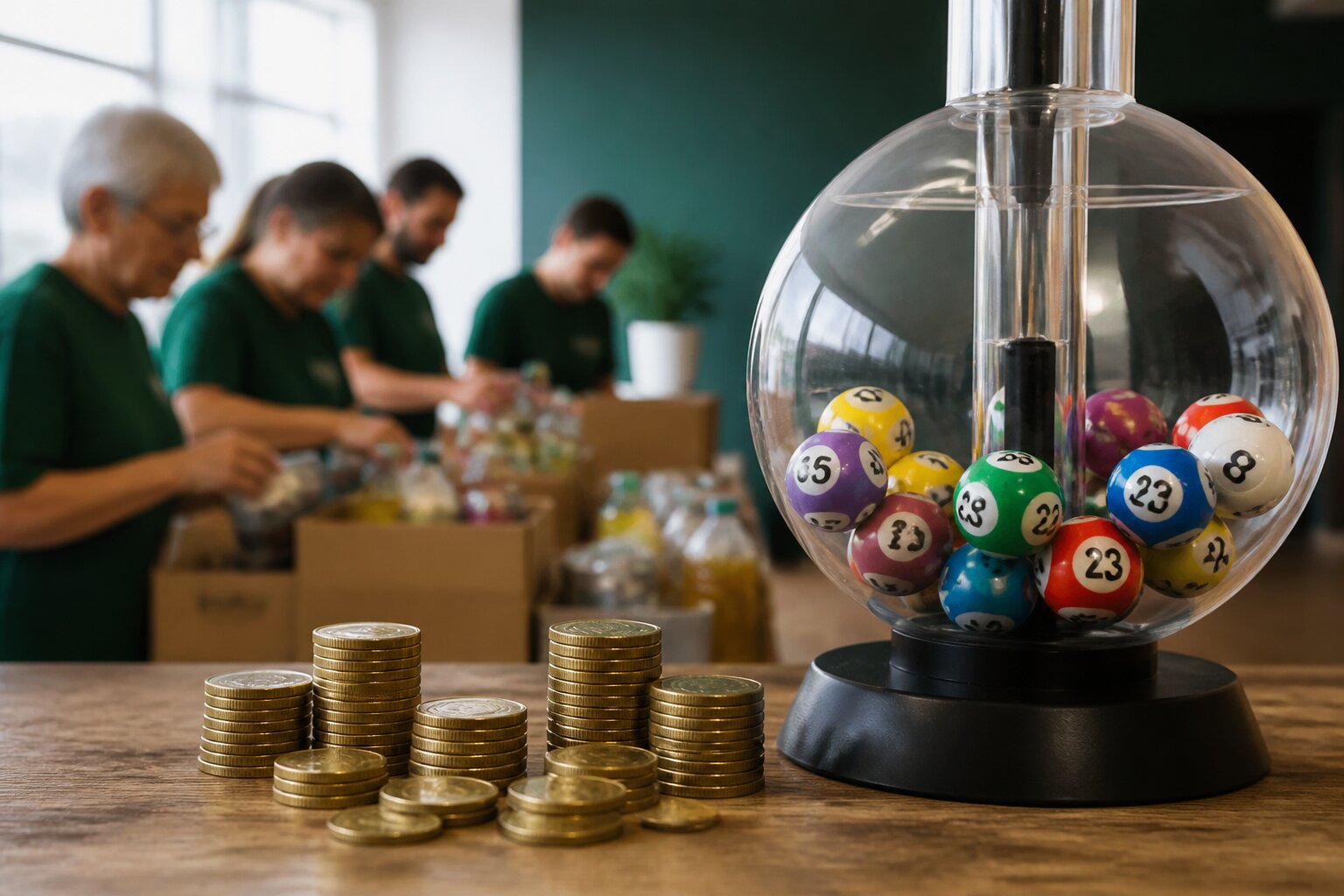
Ever bought a lottery ticket and wondered what happens to the money behind the draw? You’re not alone.
There’s more to it than adverts and high-profile winners. From the cost of a ticket to the payments that follow each draw, every pound has a purpose and a paper trail.
Read on to follow the money’s journey — where it is raised, how it’s split, and what it ultimately funds.
How Is Money Generated for the Lottery?
Most lottery funds are raised when people buy tickets. Each purchase contributes to a central pool that is divided into prize money, funding for public projects, taxes, and the costs of running the lottery. The mechanics are straightforward: a small payment from many players creates the sums that support prizes and wider spending.
Operators run draws under strict regulatory frameworks designed to protect participants. These frameworks cover fairness of the games, age verification and player protections, and require clear disclosure of odds so players can make informed choices. The emphasis is on transparency and on making sure playing remains a discretionary activity for adults.
With that foundation in place, it helps to look at the specific revenue streams that feed into the overall pool.
What Are the Main Sources of Lottery Revenue?
Ticket sales form the core of lottery income, while a few smaller sources add to the total. Together they create the funds used for prizes and public spending, all handled under established rules and reporting requirements.
Ticket Sales: The Primary Contributor
The overwhelming majority of cash comes directly from entries to draws and other official games. Each ticket bought increases the pool available for prizes and other allocations, and the system depends on broad participation to create meaningful prize funds and community grants.
Ticket sales are tracked closely and reported in regular financial statements so players and the public can see how much is raised and how it is distributed. Sales levels also influence the size and frequency of big jackpots, which in turn affect public interest and future participation.
Additional Revenue Streams Beyond Tickets
Beyond standard draw tickets, the lottery also raises money through related products such as scratchcards and online instant-win games. These products are run under the same regulatory framework and contribute a steady, if smaller, share of total receipts.
Interest earned on prize or reserve funds can add a small amount, especially when cash balances are held for short periods before distribution. Occasional approved partnerships and limited promotional activities may generate additional income, always shown in published accounts so the public can see how totals are reached. These additional streams remain modest compared with ticket sales and are disclosed in published accounts so the public can see how totals are reached.
Next, consider who is taking part and how that shapes the flow of funds.
Who Buys Lottery Tickets in the UK?
Only adults may purchase tickets, and participation spans a broad cross-section of the population. Research shows higher play rates among those aged roughly 35 to 64, though people both younger and older also take part. Players come from many different backgrounds and income levels, so there is no single profile that captures every participant.
Men and women participate at similar rates, and most people buy tickets only occasionally or in modest amounts. A relatively small proportion of players spend larger sums, while the majority play infrequently or set modest budgets for themselves. Overall patterns point to casual engagement rather than widespread intensive play.
This pattern of widespread, generally moderate participation is what generates the sums used for prizes and for funding projects around the country. Understanding who takes part helps make clearer how those proceeds are pooled and then allocated to different causes and initiatives.
How Are Lottery Funds Distributed and Used?
Once income is collected, it is divided according to fixed proportions and governance rules. A large slice goes to the prize fund that supports draw payouts. Another significant portion is allocated to public projects and charities — the so-called “good causes” — which are managed and awarded by independent bodies according to set criteria.
A portion is paid to government as tax, and the remainder covers operating costs such as staffing, retail commissions and technology. Detailed reports are published regularly, showing the exact splits so the public can see how funds flow from sales to payouts and grants. This accountability helps ensure the system serves both players and community recipients.
Understanding distribution leads naturally to the question of what happens when prizes are not claimed.
What Happens to Unclaimed Lottery Prizes?
Prizes must be claimed within the published timeframe for each game, commonly six months from the draw date. If nobody claims a prize in that period, the money is not kept by the operator for profit. Instead, unclaimed prize funds, together with any interest they earned while held, are transferred to the fund for public projects. This ensures those sums continue to benefit communities rather than going to waste.
The procedure is overseen and audited so the treatment of unclaimed prizes is transparent and consistent with the published rules. With that safeguard in place, it’s worth addressing some of the common misunderstandings about how lottery money works.
Are There Misconceptions About Lottery Funding?
There are a few persistent myths about lottery finance. One is that prize and community funds come from hidden government subsidies or secret backers. In reality, the money originates from the sale of tickets and associated games; published accounts set out the sources clearly.
Another misconception is that most income is swallowed by running costs or operator profit. Rules and published splits protect the portions that must go to prizes and to good causes, and independent reporting makes those allocations visible. These facts mean the primary beneficiaries, beyond winners, are the many community projects that receive grants.
Now that the funding sources and allocations are clearer, the final section explains the real-world impact of that money.
How Does Lottery Funding Benefit the UK Community?
Funds diverted to public projects support a wide range of community needs. Grants help local sports clubs, cultural organisations, museums, heritage conservation, health initiatives and educational programmes. Small charities and grassroots groups often rely on awards to deliver services and improve local facilities, while larger projects may use funding to protect historic sites or expand public access to arts and culture.
Awards are made according to published criteria and monitored to ensure money reaches projects that will make a measurable difference. Over time, this redistribution of ticket income has contributed to facilities and schemes that touch everyday life across the country, turning a portion of player spend into tangible community benefits.
In short, the money raised by lottery play is channelled through a clear framework: prize payouts, public funding, tax and operating costs, with rigorous reporting to show the flow. That completes the full picture of where lottery funds come from and how they are put to use.
**The information provided in this blog is intended for educational purposes and should not be construed as betting advice or a guarantee of success. Always gamble responsibly.