
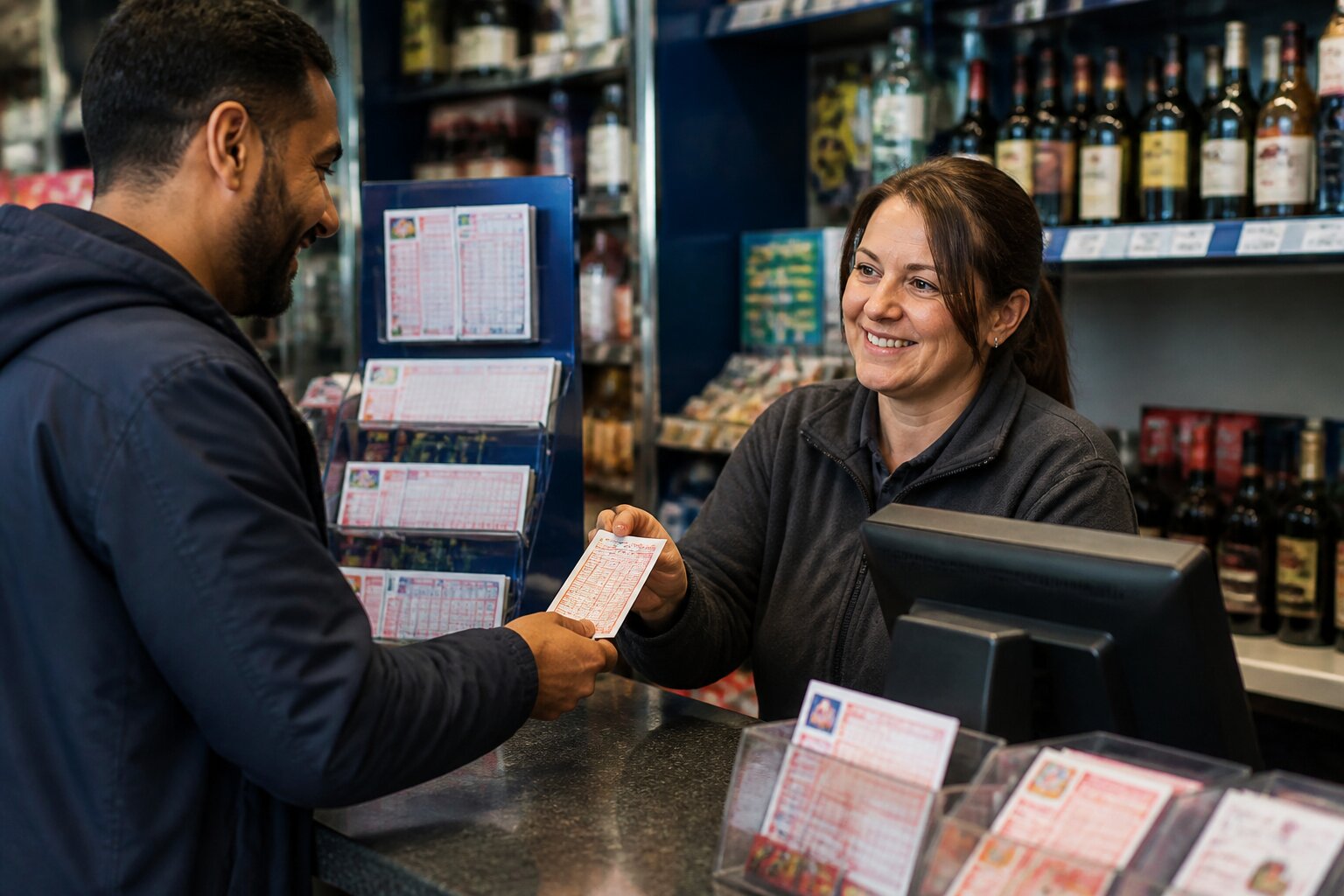
Have you ever wondered if the corner shop where you bought a lottery ticket gets a cut when someone wins big? It’s a question that comes up whenever a large prize makes the news.
Understanding how retailers are paid for selling tickets clears up a lot of myths and gives a clearer picture of the business behind the game. Read on to learn how retailers are involved, what payments they can receive, and how those payments relate to players’ prizes.
How Are Retailers Involved in Selling Lottery Tickets?
Retailers act as official points of sale, linking customers to the national lottery through secure terminals in their shops. To offer tickets they must apply and be authorised, meeting regulatory standards that cover the handling of cash, secure ticket printing and accurate transaction logging.
Staff are trained to follow age-verification procedures and display required information at the point of sale. Shops must also stay alert for any suspicious behaviour and report concerns as part of their agreement. These controls are designed to protect both customers and the integrity of the lottery system. This groundwork explains how retailers become eligible for the payments discussed next.
What Rewards Do Stores Receive for Selling a Winning Ticket?
When a substantial prize is sold at a shop, the lottery operator may pay the retailer a one-off bonus. These payments are discretionary and usually reserved for top-tier prizes like major jackpots. The amount and criteria for a bonus are set by the operator and can vary between games or draws.
Such bonuses are paid to the business, not to individual members of staff, and they sit alongside the regular income a retailer makes from selling tickets. While not every big win triggers a bonus, these payments reward a retailer’s participation in the distribution network and acknowledge their role in facilitating ticket sales. The next section describes how these payments fit alongside the everyday commission retailers receive.
How Are Retailer Commissions and Bonuses Calculated?
Retailers receive income from lottery activity in two main ways: a regular commission on standard sales and occasional bonus payments linked to high-value wins. The commission is a fixed percentage applied to every ticket or scratchcard sold and provides steady revenue that forms part of a shop’s routine takings.
Bonus payments are separate and tied to specific winning outcomes. They are less predictable and are paid only under the conditions set by the lottery operator. These two channels—ongoing commission and occasional bonuses—work together to compensate retailers for offering the service, while keeping all arrangements within established regulatory requirements.
Standard Commission vs. Bonus Incentives
The standard commission is consistent and unrelated to whether tickets win. It supports the day-to-day business case for stocking lottery products. Bonus incentives, meanwhile, are one-off sums for particular large wins and are paid infrequently. This structure keeps the retailer’s regular income reliable while allowing occasional recognition for selling a notably successful ticket.
Are There Differences for Jackpot and Non-Jackpot Wins?
Bonuses are generally tied to the highest prize tiers. Most smaller prizes generate only the standard commission, not a bonus. Reserving the largest rewards for top prizes ensures those bonus payments remain exceptional and helps maintain a clear distinction between regular sales income and incentive payments linked to major outcomes. With that financial picture in place, many readers wonder whether these retailer payments affect what winners receive — which is covered next.
Does the Retailer Bonus Affect Prize Winners?
Retailer bonuses do not change the amount a player wins. Prize payouts are paid in full to winners as specified by the game rules, and any retailer payment is separate and made by the lottery operator. This separation is enforced by regulation to protect players’ interests and ensure advertised prizes are honoured exactly as stated.
Because retailer rewards are handled independently, winners can claim their prizes with confidence that the sum shown for a draw or scratchcard is the amount they will receive. Retailer payments are intended to recognise the role of the outlet in selling tickets and supporting the lottery, rather than to alter or supplement the prize paid to a player.
Having clarified that, the following section explains how those retailer payments are treated for tax purposes.
Are Store Payouts Taxed or Subject to Fees?
Payments to retailers—both commissions and bonuses—are business income and must be declared in annual tax returns. There are no special deductions taken by the lottery operator before these sums are paid to the shop; instead, HM Revenue & Customs treats them as part of the shop’s taxable receipts.
Retailers should include these receipts when preparing their accounts and calculating taxable profit for the year. The operator does not withhold tax on these payments, so responsibility for any tax due rests with the shop. This means that along with income tax or corporation tax, retailers may need to consider the impact on other tax liabilities, such as National Insurance contributions where applicable.
Keeping accurate, contemporaneous records of all lottery-related income is essential. Detailed records will make it easier to complete annual returns, respond to any HMRC queries and demonstrate compliance if required. Seeking professional financial or accountancy advice can help ensure correct reporting, clarify which expenses are allowable against tax, and reduce the risk of mistakes.
Next, consider how selling lottery tickets affects a shop beyond direct payments.
How Do Lottery Sales Benefit Local Shops Overall?
Offering lottery tickets can bring more customers into a shop, often leading to additional purchases and increased overall takings. When a win is associated with a store it can raise the shop’s profile locally and encourage repeat visits, which in turn supports other areas of the business.
These commercial benefits complement the direct income from commissions and occasional bonuses, but they do not change the mechanics of prize distribution or a player’s entitlement. Shops must continue to follow regulatory safeguards while they enjoy the commercial upside. With these practical effects in mind, it helps to clear up some common misunderstandings about how the system operates.
Common Misconceptions About Lottery Ticket Sales and Store Payouts
There are several persistent misconceptions about retailer involvement that can cause unnecessary concern. One is the idea that a retailer can influence which tickets win or select winning tickets from stock. In reality, draws and instant-win games operate under secure, regulated processes that determine outcomes independently of where tickets are sold.
Another mistaken belief is that buying from a shop with previous winners will change the odds of winning. Every ticket and draw is governed by the same rules, so the point of sale does not affect prize probabilities. A further misconception is that any retailer payments comes out of the winner’s prize; as explained earlier, retailer payments are separate and do not reduce the payout a player receives.
Clearing up these misunderstandings helps everyone engage confidently with the lottery, knowing how retailers fit into the overall system and what their payments represent. This completes the explanation of how retailers are compensated and how that interacts with player prizes, tax responsibilities and shop benefits.
**The information provided in this blog is intended for educational purposes and should not be construed as betting advice or a guarantee of success. Always gamble responsibly.