
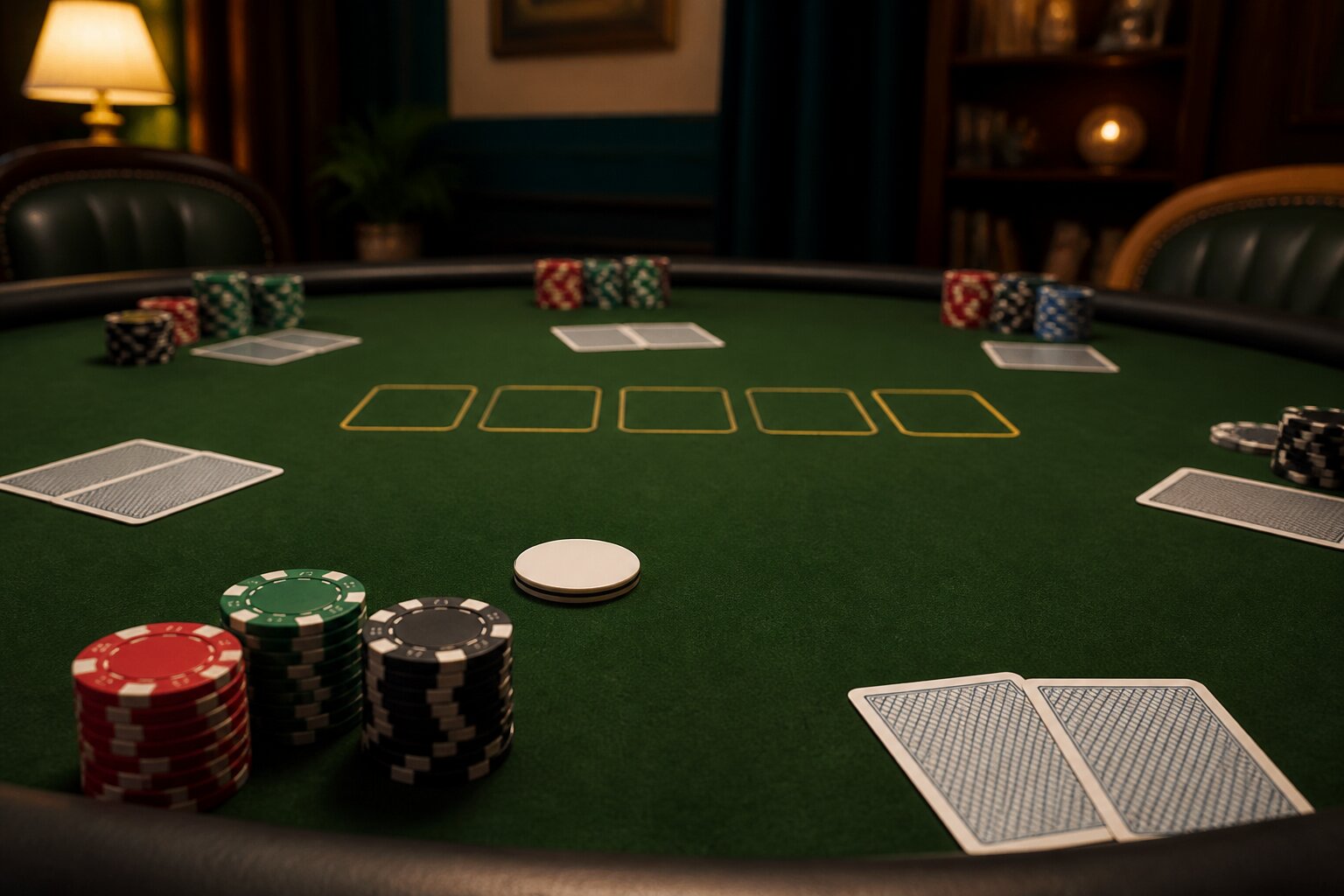
If you’ve ever wondered why seasoned poker players always keep an eye on the dealer button, you’re in the right place. The dealer position, often called "the button", affects how each hand is played and how you should plan your moves.
Mastering this simple but important element will give you a clearer sense of timing and strategy at any table, whether you’re learning the basics or sharpening your game. Read on to learn what the button does, why it matters and how to recognise and use it effectively.
Ready to get started? The next section explains exactly what the dealer button is and how it functions in play.
What Is the Dealer Button in Poker?
The dealer button is a small, round marker that rotates around the table after every hand. It identifies the player in the dealer position for that round, even when a professional dealer handles the cards. That player acts last in most betting rounds, which changes the information available to them and how they should react.
The button also indicates which players must post the small and big blinds, the forced bets that start the action. After a hand finishes, the button moves one seat clockwise so everyone takes turns in each position over time. This rotation keeps the game balanced and ensures each player experiences different positional advantages and disadvantages.
Understanding the button helps you follow the order of play and know when to expect your turn to act or post a blind.
How Does the Dealer Position Influence Gameplay?
Position at the table strongly affects how a hand unfolds. Acting later in a betting round provides more information about opponents’ intentions, which in turn shapes the decisions you can make. From choosing whether to enter a pot to deciding the size of a bet, position informs those judgments.
Players in early positions must commit to actions with less information, while those on or near the button can respond to others’ moves. That does not change the cards you hold, but it does change the contexts in which those cards play. For example, a modest hand that is hard to play from early position may become an acceptable option from the button because you can see how other players behave before committing more chips.
When you combine position with reading bet patterns and stack sizes, it becomes a practical tool for deciding when to be aggressive or when to exercise caution.
Why Is the Dealer Button Considered the Best Seat?
The dealer button is often called the best seat because it allows the player to act last in most betting rounds. Acting last is valuable because you observe opponents’ choices before you must decide, which helps when balancing bluffs and value bets and when deciding whether to continue in a pot.
Being on the button also makes certain plays more profitable. Stealing the blinds is a common tactic from the button; since the remaining players to act are fewer and often in blind positions, well-timed raises can win pots uncontested. At the same time, defensive plays from the button allow you to control pot size and leverage position against short stacks or players with predictable tendencies.
That said, the button is not a guarantee of success. It provides strategic advantages that must be used alongside hand selection, bet sizing and attentive table observation.
Common Myths About Dealer Position in Poker
Several misconceptions about the dealer position persist. One is that sitting on the button will somehow change the nature of the cards you receive. It does not; card distribution is independent of seat. Another is that being on the button makes the game easy. While it simplifies some decisions, the button still demands good timing and accurate reads.
Some players assume that profit from the button comes only from stealing blinds. While steal attempts are common, effective button play also involves adjusting to table dynamics, stack depths and how opponents react to pressure. Treating the button as a single-purpose advantage will limit your results.
Recognising these myths helps you adopt a balanced approach to position and avoid overreliance on a single factor in your decision‑making.
How to Identify the Dealer Position at the Table?
Spotting the dealer button is straightforward in both live and online games. In live play you will see a small disc, often labelled Dealer or D, placed in front of one player. That disc moves one seat to the left after every hand. Online, a visual marker beside a player’s name or avatar serves the same purpose and shifts automatically.
Knowing where the button sits lets you anticipate who posts the blinds and who will act last in each betting round. This awareness is especially useful when entering a new table or taking a seat mid-game, because it clarifies your immediate responsibilities and the positional dynamics you will face.
Impact of Dealer Position on Betting Rounds
The dealer position determines the order of action across the streets of a hand, shaping how bets, calls and raises unfold. Players closer to the button will act later, which affects their ability to control pot size and to apply pressure. Conversely, early-position players must make choices with less information, often relying more on hand strength than on table behaviour.
Position influences not only single hands but also long-term tendencies. Players who frequently exploit positional advantages can accumulate small edges that add up over many hands. Observing how opponents change their play when in different seats offers practical clues about how to adapt your own strategy.
Thinking about position as a continuous factor, rather than a one-off benefit, makes its impact on betting rounds clearer.
How Does Dealer Position Affect Pre-Flop and Post-Flop Action?
Pre-flop action starts with the player to the left of the big blind and moves around the table, ending with the button. From this seat you can decide after seeing most opponents’ intentions, which makes it an ideal spot for raising to isolate a weaker hand or for calling to see a favourable flop.
Post-flop, the player to the left of the button acts first and the button acts last in each betting round. Acting last gives you a chance to control the pot and apply pressure when opponents show weakness. For example, on a dry board where few hands connect strongly, the button can often take the initiative with appropriately sized bets to win pots without large showdowns. Conversely, on coordinated boards where draws are present, acting last helps you decide whether to protect a marginal hand or to keep the pot small.
These patterns hold across most popular poker variants and form the backbone of positional strategy.
Dealer Position Etiquette in Home Games and Casinos
Good handling of the dealer button contributes to an orderly game. In home games, the button should be passed neatly to the next player after each hand, and players should be clear about who is responsible for posting blinds. If someone joins late, a brief, courteous clarification keeps play moving smoothly.
In casinos, staff generally manage the button and blinds, but players still benefit from polite communication if there is any uncertainty about turns or bets. Avoid moving the button yourself unless you are the designated dealer for that hand, and be mindful of actions that might slow the game or confuse others.
Respectful behaviour around the button promotes an enjoyable table atmosphere and reduces disputes.
Understanding Dealer Position in Online Poker
Online poker automates the button and the betting order, which removes much of the bookkeeping needed in live play. The platform marks the dealer position and advances it automatically after each hand, and the blinds are posted by the software. This makes it easier to focus on strategy and opponent tendencies.
Despite the automation, positional principles remain the same. Online players still adjust ranges and bet sizes based on whether they are on the button or in earlier seats, and attentive players will note how opponents play from different positions. The speed and volume of online play can magnify positional edges, so understanding the button’s role is particularly valuable in virtual games.
If you are using software tools or tracking stats, position-based metrics often reveal useful patterns that can be applied to improve long-term results.
Final thought: mastering the dealer button is about combining position with observation and disciplined play so you can make better-informed choices at every table.
**The information provided in this blog is intended for educational purposes and should not be construed as betting advice or a guarantee of success. Always gamble responsibly.