
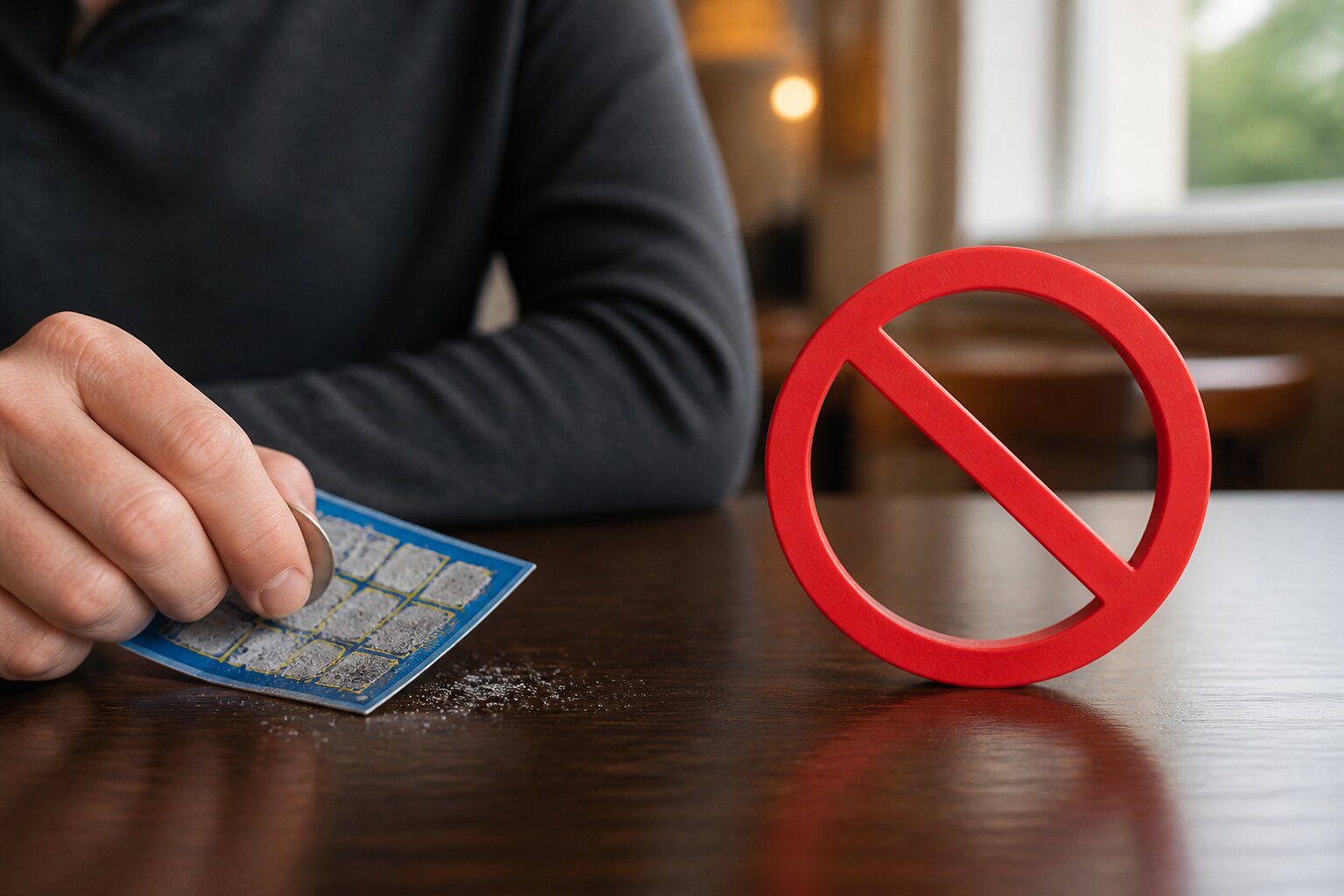
Scratch cards have long been a quick, familiar way for adults to try an instant-win game, but recent headlines have left many readers wondering whether their future is secure. With talk of tighter rules and changing sales practices, it’s sensible to look at what’s actually changing rather than relying on rumours.
This article explains what scratch cards are, how they are sold, what the law says, and how retailers and operators have responded. Read on for clear answers and the latest on availability and regulation.
What Are Scratch Cards & How Are They Sold in the UK?
Scratch cards are small cards, usually thin cardboard or plastic, with coated areas that are removed to reveal symbols or numbers underneath. The typical format asks players to match symbols or numbers for a prize, and prizes range from modest cash amounts to larger sums. Their instant result and straightforward rules are what make them familiar to many adult players.
You can find physical scratch cards in shops such as newsagents, supermarkets and convenience stores; they are often displayed near tills or behind the counter so staff can oversee sales. Digital versions operate on licensed websites and recreate the reveal process on screen. In both retail and online settings, operators must follow legal requirements for age checks and clear game information, including odds and prize details, so players understand what they are buying.
These practical details about availability and regulation set the scene for recent legal changes, which we’ll cover next.
Are There New Laws Affecting Scratch Card Sales?
Recent legal updates have focused on tightening protections around who can buy gambling products and how those products are presented. One significant change raised the minimum purchase age for scratch cards to 18 in April 2021, aligning them with other adult-only gambling products and reducing the risk of underage access.
Regulation requires that sales are subject to age verification and that clear information about prizes and chances is provided at the point of sale and online. Advertising standards forbid marketing aimed at under-18s and demand that promotional material does not glamorise gambling. Operators are also required to have policies and processes that identify and assist customers who may be experiencing harm, and to supply accessible information about support services.
There have been no laws introducing an outright ban on scratch cards as a product; instead, the emphasis has been on stronger safeguards and clearer consumer information. The next section looks at why regulators sometimes consider further restrictions.
Why Might Scratch Cards Be Banned or Restricted?
Policy makers and health bodies examine gambling products to make sure potential harms are managed. One common concern is underage access, since scratch cards are straightforward to buy and play; stricter age checks and more guarded displays are one response to that risk.
Another consideration is the potential for repetitive purchase behaviour. The immediacy of instant-win formats can lead some people to make frequent, small purchases that become problematic. That concern shapes calls for better player protections, such as spending and time limits, clearer information about return rates, and improved customer support pathways.
Advertising and presentation are also under scrutiny. Campaigns and in-store displays that might appeal to younger people or vulnerable groups are monitored and restricted. Ongoing research and public health advice inform whether further controls would be beneficial. These regulatory pressures, in turn, have influenced how shops and online platforms manage sales and display, which is what we turn to next.
How Have Retailers Responded to Changes?
Retailers have altered how they sell and present scratch cards to comply with the tighter rules. Staff training has been updated to ensure age checks are carried out consistently, and many shops now keep cards behind the counter or in areas visible to staff so sales can be supervised.
Point-of-sale materials now include clearer information about prizes and the odds of winning, and marketing in stores has been adjusted to avoid imagery or placement that could be attractive to under-18s. Electronic tills and prompts help ensure that staff remember to verify age where appropriate.
Those in retail have also worked with regulators and lottery operators to align practices with latest guidance. With these changes in place, it’s still straightforward to find scratch cards in many outlets — but where exactly can you buy them today?
Where Can You Still Buy Scratch Cards?
Scratch cards remain available across the UK to adults aged 18 and over, from both physical and online sellers that meet regulatory requirements. Choosing authorised sellers ensures that age checks are enforced and that accurate information about prizes and odds is provided. Purchasing from licensed outlets also helps protect players against fraud and ensures any large wins are paid out through recognised channels.
Supermarkets & High Street Shops
Major supermarkets, convenience stores and newsagents regularly sell scratch cards. Retailers are obliged to follow age verification rules and to manage displays so that staff can supervise sales. This means cards are commonly found at tills or in secured stands.
Staff training and store policies are intended to make sure sales are made responsibly, with prominent signage about rules and age limits in many outlets. Retailers must also comply with advertising restrictions and other regulations designed to keep gambling products appropriately presented in public spaces.
Online Scratch Card Options
Licensed online gambling sites offer digital scratch-card games that mirror the retail experience with on-screen reveals. These sites must verify age and identity, and present clear information about how each game works and the prize structure. Many platforms also display their licence details and regulator contact information so players can check legitimacy.
Online platforms also provide tools and resources aimed at preventing harm and helping customers stay in control. These commonly include deposit limits, time-out options, self-exclusion and links to support organisations. Secure payments and responsible marketing practices are further requirements for operators authorised to sell these products.
Knowing where cards are sold helps, but you may still be wondering whether any sweeping ban exists.
Is There a Complete Ban on Scratch Cards?
There is no blanket ban on scratch cards in the UK. Both physical and digital scratch cards are lawful when supplied by firms that meet regulatory standards, which include robust age verification, clear and transparent prize information, and consumer protections designed to reduce harm.
Legislation such as the Gambling Act and subsequent regulatory guidance set out how such products must be sold and promoted. The regulator requires firms to demonstrate that they operate responsibly, with measures in place to prevent underage play, to display odds and prize details clearly, and to offer access to support for those who may experience harm.
Policy changes in recent years have tightened the rules around access and advertising, particularly for online promotions and marketing aimed at younger audiences. While these changes have limited some promotional activity and introduced stricter controls, the product itself remains available to adults in licensed outlets and on licensed websites.
With the current framework in place, the final question is how these measures might change in future and what that means for players and sellers. Future regulatory reviews or government consultations could lead to additional restrictions or further clarifications, so firms and consumers should keep abreast of official guidance and comply with any new requirements.
What Does the Future Hold for Scratch Cards in the UK?
The future will be shaped by ongoing regulatory reviews, research into gambling behaviour, and public consultations. Discussion is likely to focus on whether current protections are sufficient, how advertising should be managed, and what further safeguards could reduce harm for vulnerable people.
Operators and retailers are expected to continue adapting practices: clearer information at point of sale, robust age checks, and measures that help customers manage spending are likely to remain priorities. Regulators will monitor market data and research to decide if more targeted rules are needed.
For players and retailers alike, the central aim will remain the same: allow adults to choose whether to take part while maintaining controls that protect those at risk. That balance will determine how scratch cards evolve in the years ahead.
**The information provided in this blog is intended for educational purposes and should not be construed as betting advice or a guarantee of success. Always gamble responsibly.